
S01E09 “Deathwalker”
[1994.04.20] Na'Toth attacks an alien woman that has just arrived on the station, claiming that she is the Dilgar war criminal Jha'dur—known as Deathwalker. Talia is hired by Kosh to oversee some rath

This episode spends 40 minutes deepening the Babylon 5 lore, granting a closer look at the history, the cultures, and most importantly, how galactic politics gets played. It answers basic questions about what the players want and where they stand, then introduces far more complex ones about who’s really pulling the strings. Against the backdrop of deciding who gets the final word on dealing with a notorious war criminal, alliances are tested, collaborators are revealed, leverage is applied, and ultimately a tense compromise is achieved.
And then, just when all seems resolved, the stakes change entirely.
The Players Re-revealed
This episode is a crash course in galactic realpolitik. In fact, it could serve as an alternate pilot for how thoroughly it immerses you in the political mechanics of this universe. The arrival of Jha’dur, known also as the war criminal Deathwalker, causes every major player to assess and reshuffle their diplomatic hand.

The Narn have beef with Jha’dur, but are willing to put it temporarily aside for the sake of strategic advantage, and a chance at later revenge. But as soon as Earth Alliance learns what Jha’dur is peddling, an anti-aging serum, virtual immortality, they quickly move to secure the tech for themselves. When the League of Non-Aligned Worlds learns of Jha’dur’s presence on Babylon 5, they petition to put her on trial for her crimes. Sinclair thinks he can split the Advisory Council and force the decision to the League, at which point he would bring them in on Earth Alliance’s plans, but Lennier throws the vote. It turns out, the Minbari were also collaborators with Deathwalker, a secret they’d like to keep hidden. Whew!
Oh, and if that isn’t layered enough, Jha’dur reveals her serum requires taking a life to work—a poison pill designed to infect Earth Alliance with her legacy of death. If they use it, they become her heirs. It’s a memetic gambit; her race may be extinct, but her ideology survives through anyone unscrupulous enough to use the serum, a detail that applies stress to Earth ideals.
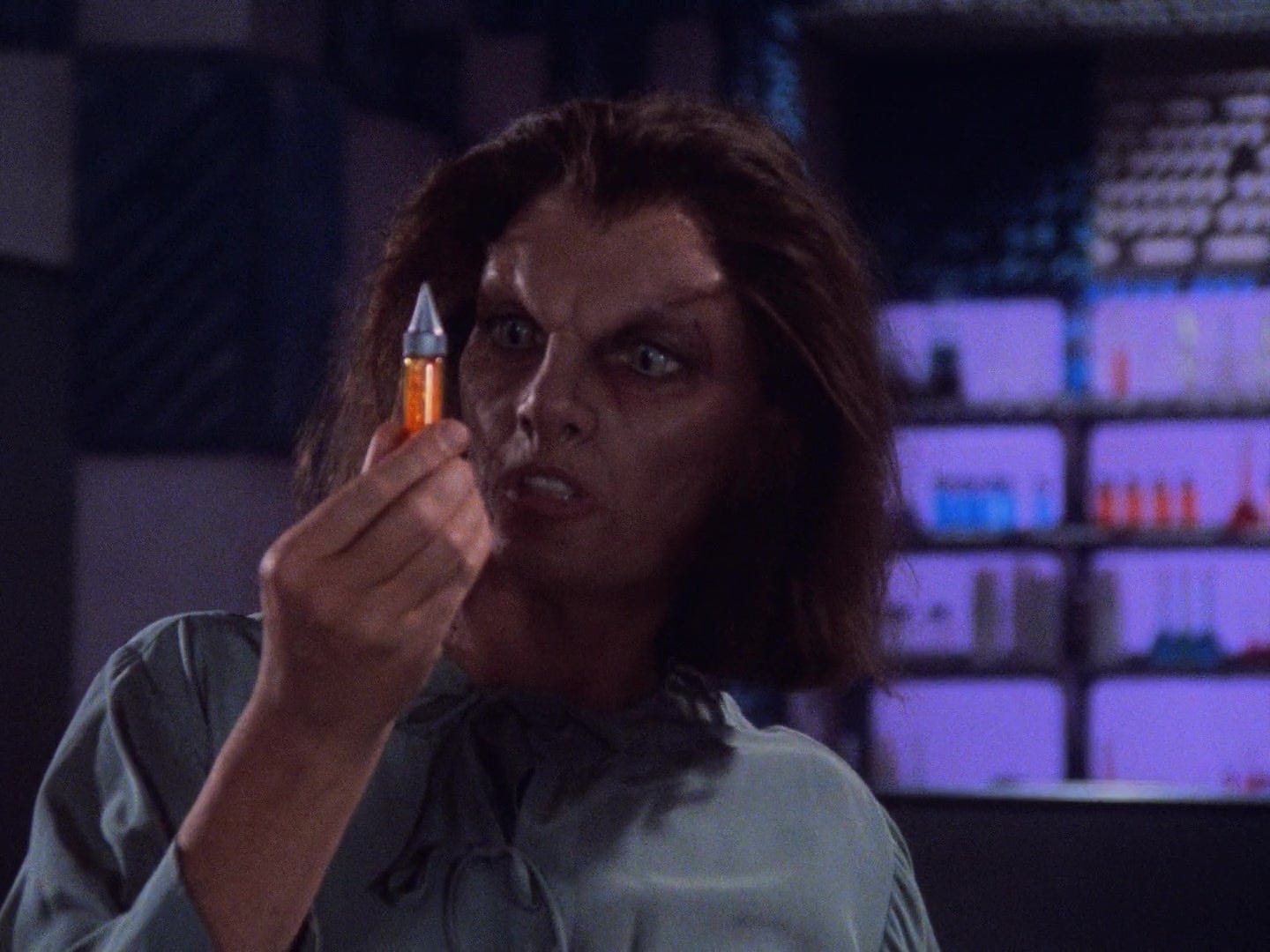
It’s a lot but it’s surprisingly legible, with illustrative micro-moments that underscore the hierarchy of power. For example, the angered League members attempt to extract Jha’dur by force only to be set squabbling by Ivanova over who has the strongest claim to put her on trial. This gives Sinclair an opportunity to work a strong-arm compromise.
To summarize, you have:
Earth flexing hegemonic muscle
Narn willing to deal with a devil for advantage
Centauri performing detachment while maneuvering
The League showing strength in numbers, but easily fractured
Minbari operating through proxies and secrets
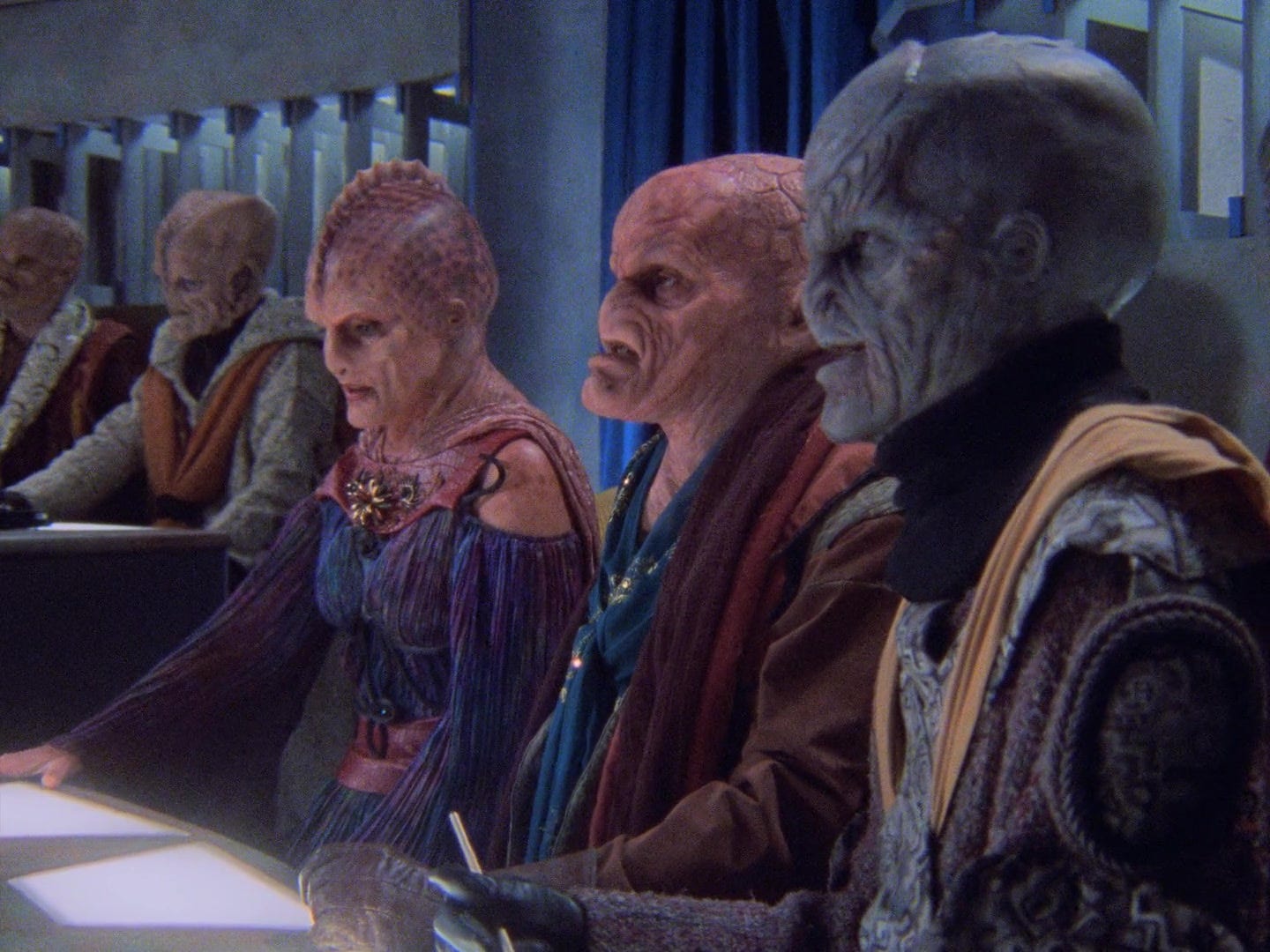
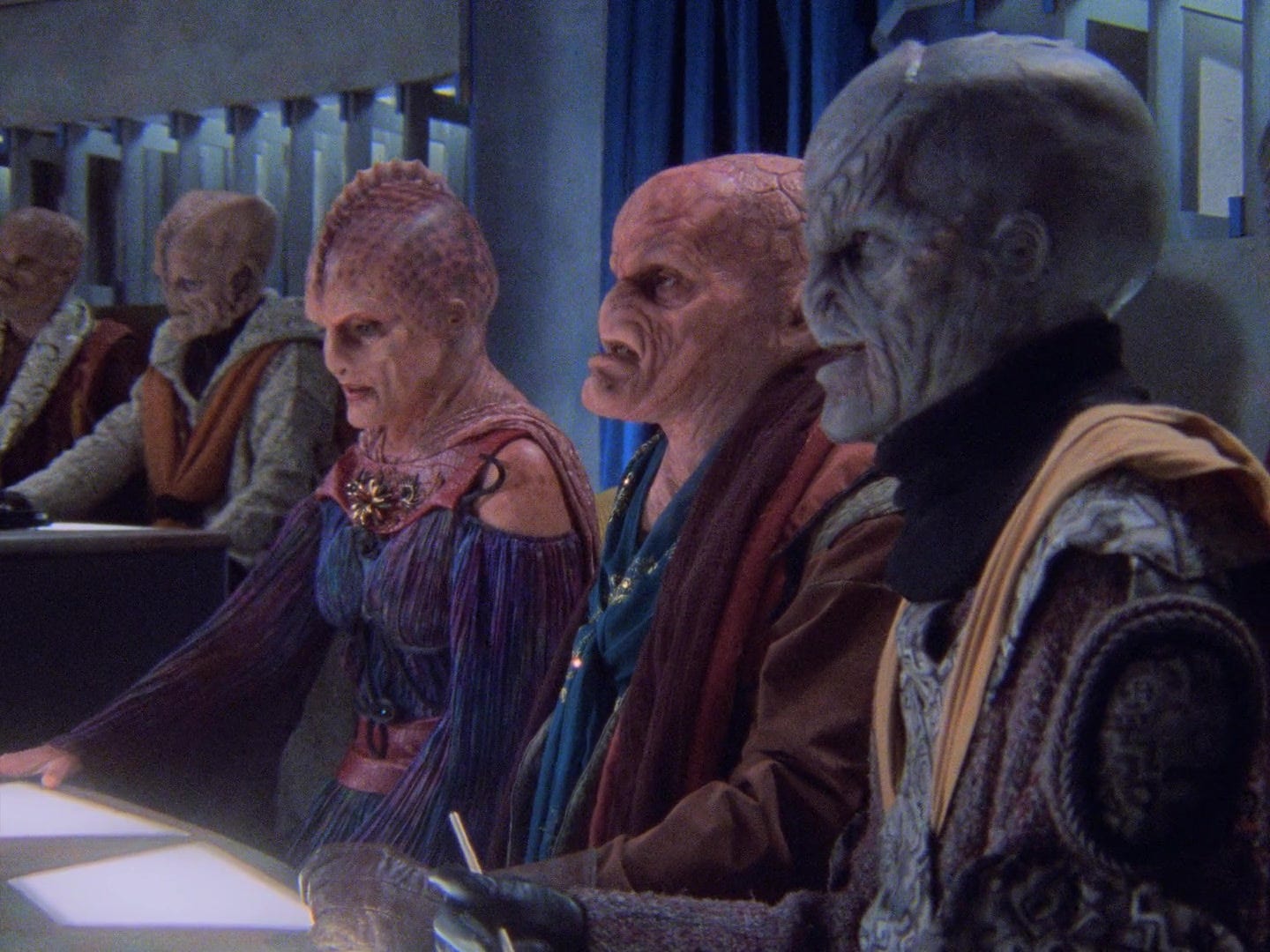
Every HOA meeting ever, but with more fins.
And Then There Are The Vorlon
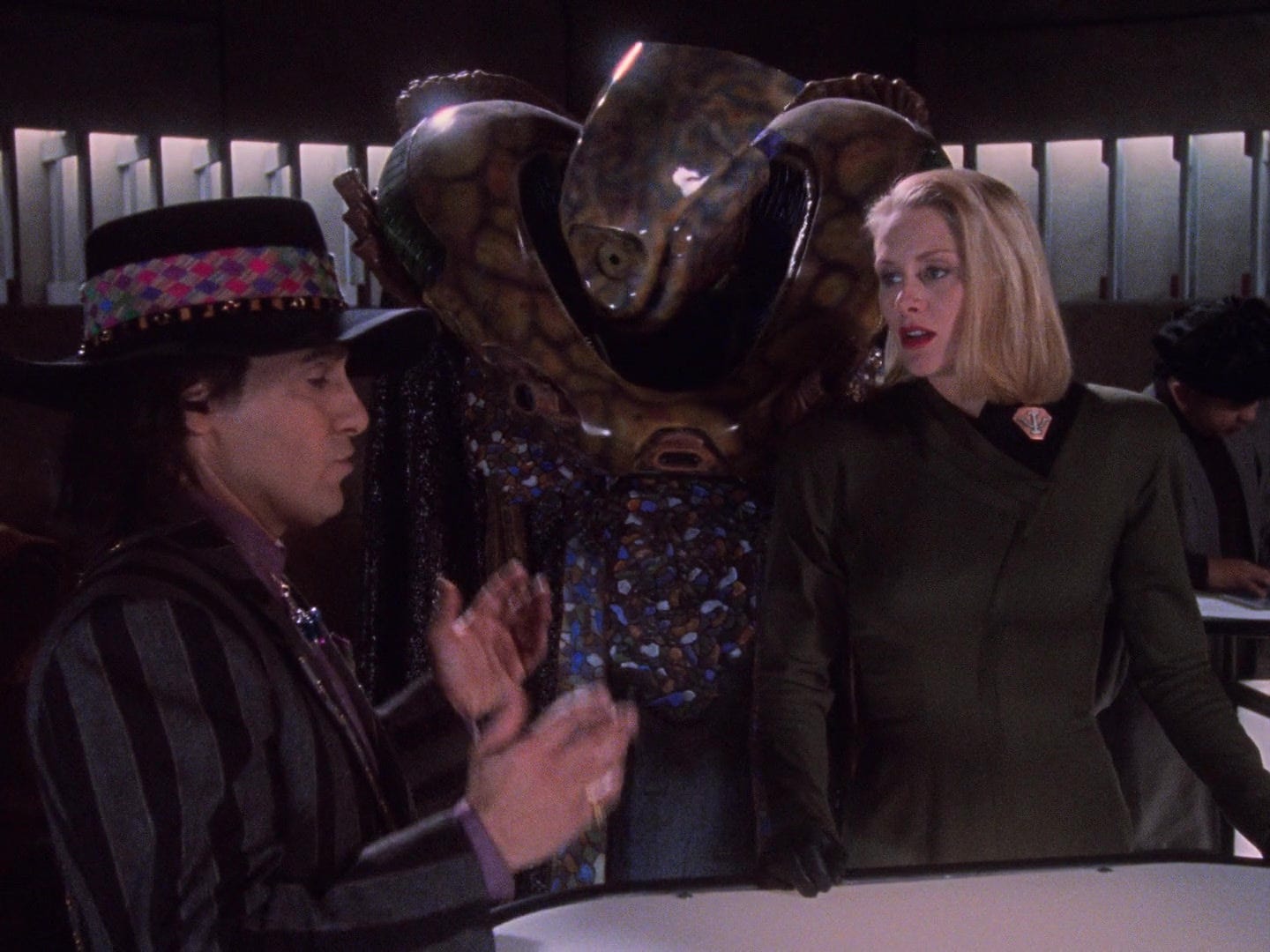
After nine episodes, Ambassador Kosh is finally out of his room and appears to be playing word association games with a funny little man in an oversized hat? Except Talia is there to monitor negotiations, which is pointless, because she can’t even read the little guy’s mind. In the Council vote, Kosh predictably abstains. It turns out, he’s been using the thoughtless man as a conduit to extract Talia’s deepest fear—for reasons he won’t explain, except to say, “For the future.” It all serves to make you wonder what the Vorlon are even doing on Babylon 5. That is, until the end of the episode.
With everything related to Jha’dur worked out, she is loaded onto a transport ship for Earth. Suddenly, a Vorlon ship arrives and blasts the ship to particles. Kosh is with the Babylon 5 crew when it happens and flatly states, “You are not ready for immortality.”
What This Means
On paper, the ending should feel like a rug-pull—a sudden intervention that resets the board. But it doesn’t, because the show has been seeding questions about power and control since the pilot. The Vorlon strike doesn’t erase those questions; it reframes them. Who’s really in charge? Who’s being tested? The Deus ex Machina doesn’t resolve anything—it just makes the mystery deeper.
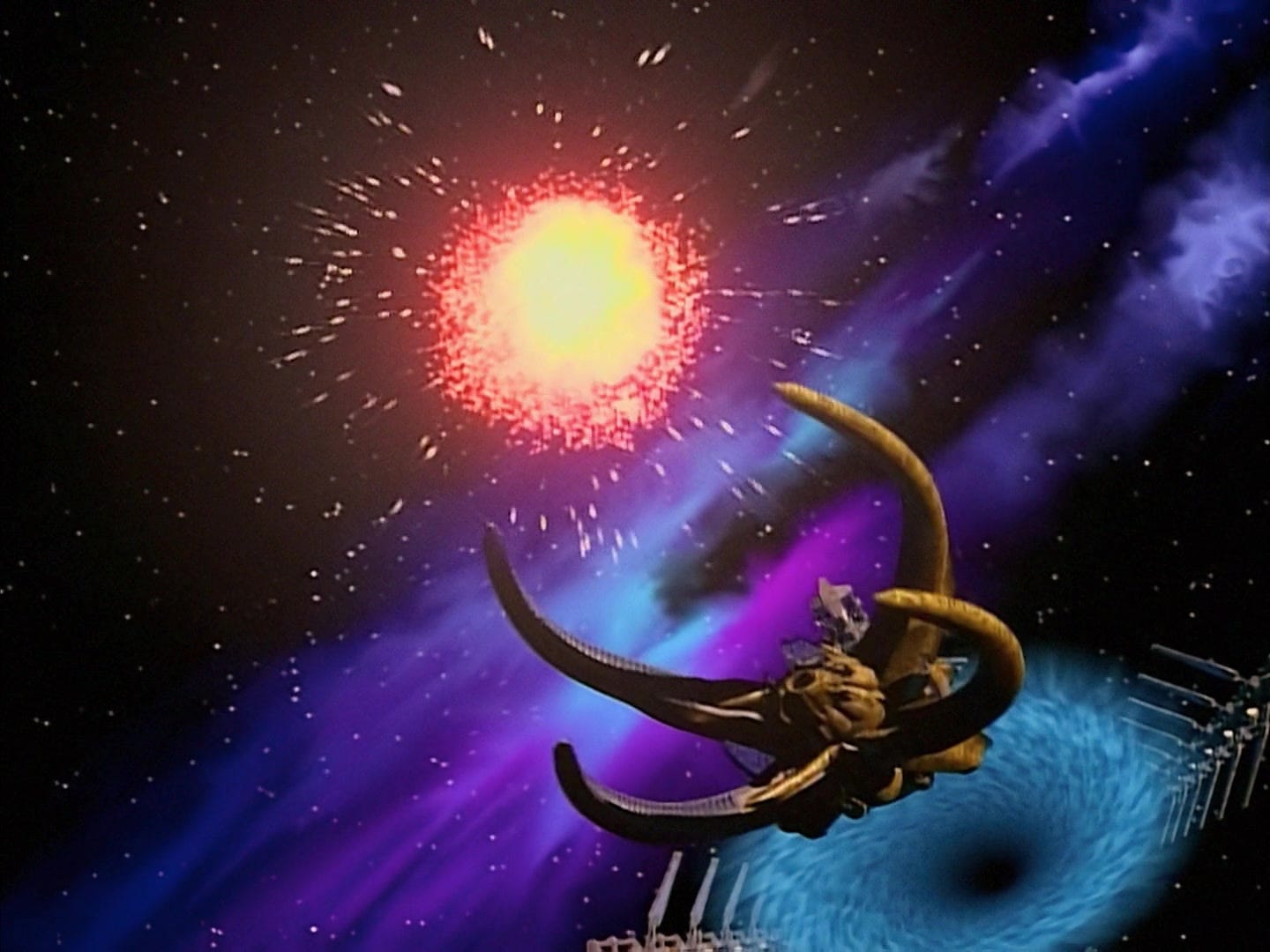
From a craft perspective, it’s because reminders were peppered into the script: an allusion to the hole in Sinclair’s mind, tensions between Narn and Centauri, a clearer picture of the brutality of the war. Rather than diffuse any of that, the idea that the Vorlon are possibly just monitoring the entire situation and drawing lines around it sends a tingle up the spine.
Are the Vorlon benevolent overseers, protecting younger races from themselves? Or are they staging a game and everyone else are the pieces? Sinclair asks Garibaldi whether little powers will ever not be at the mercy of bigger powers. That question also goes unanswered. But according to Garibaldi, the Vorlon make God look like a con man. What a claim.
Always loved this episode, and a prosthetic they gave to Ja'Dur, it's very believable and for my taste lifelike. I saw 90s Treks in mid 2000s, and was baffled by their prostherics with much higher budget.
A note: Deathwalker doesn't give serum to Alliance only, she knows the deal and the fact that alien scientists will work on it too. So her is not just towards Earth, she expect half of whole galaxy to kill another half.
Some JMS quotes about his thoughts on the episode:
"Your statement about the serum being a means of getting to the truth or her truth at the very least is quite correct. And appropos to current reality. We look back at the Nazis, and others, and say, "Well, WE could never do that." But of course we could. Fine tune your attention to the frequency of misery and inhumanity, and in short order you'll pick up Rwanda, and Bosnia and a host of others. Our capacity for greatness is as substantial as our capacity for evil. And we must constantly be reminded of that duality; to pretend it simply isn't there, or is somebody else's problem, inevitably leads to tragedy. (For those interested, btw, I would encourage you to check out a short story by Mark Twain, called "The Man Who Corrupted Hadleyburg." I think you will find it *most* illuminating.)"
And here's a doozy of one --
"Jim, your thesis comes from the underlying assumption that, as in the Trek universe, All Things Must Be Done Fairly, the government must in the end be wise and fair and sensible.
That ain't our universe. That ain't even *this* universe.
Sinclair must follow orders. He didn't want to escort Deathwalker off and on to Earth, those were his marching orders. *The same marching orders would be given to an ambassador representing Earth*. So your career diplomat would be in exactly the same position. What, do you think that career diplomats are independent agents of goodness? They all work for SOMEone, representing their interests.
Earth put in the majority of the money required to build and operate B5. They have the right, as such, to appoint a provisional governor, and that is the function that Sinclair mainly serves. He runs this place, AND he is responsible for maintaining good relations with other representatives. He is also on a short leash. And in some cases, as in "By Any Means Necessary," other people are sent in to handle certain kinds of negotiations.
Yes, it is a conflict of interest. So what? Do you think Earth cares much about that? Is it awkward? Yes, of course. It *should* put him in moral quandries. The Earth Government is constantly getting him into binds. What they wanted him to do in "Deathwalker" was more or less of a dubious nature. But in the end, he found a fairly moral solution to the problem. That's what he does. He finds anhonorable way out of very difficult and morally ambiguous situations. What you suggest is that we remove the moral ambiguities. Ehhh. I find that boring as hell.
Do the other species like it? Of course not. Okay, so what're they going to do? Boycott B5? And let other species take advantage of all the economic and political benefits the station provides? Let others grow in familiarity and form alliances that might in time turn against them? Not a chance. Fair or not, it's the only game in town.
So I don't buy your solution because I don't think it's a problem. You do. That's life. Political situations are rarely fair, or logical, or ethical. If politics were based on ethics this would be a MUCH better world. But politics are generally based on who has the power, and the money, and the guts."