
S01E10: “Believers”
An alien couple comes to Dr. Franklin with their terminally ill son. The child could be cured by a simple operation, but the parents' religion specifically forbids it. Meanwhile, Ivanova escorts a dam

A dying child. Parents whose faith forbids the surgery that could save him. A doctor determined to act anyway. The Babylon 5 episode “Believers” begins with a collision between incompatible worldviews. Franklin sees a simple medical problem he can fix. The parents see an assault on their child’s soul. Commander Sinclair sees a jurisdictional nightmare that could shatter the fragile pluralism of his station.
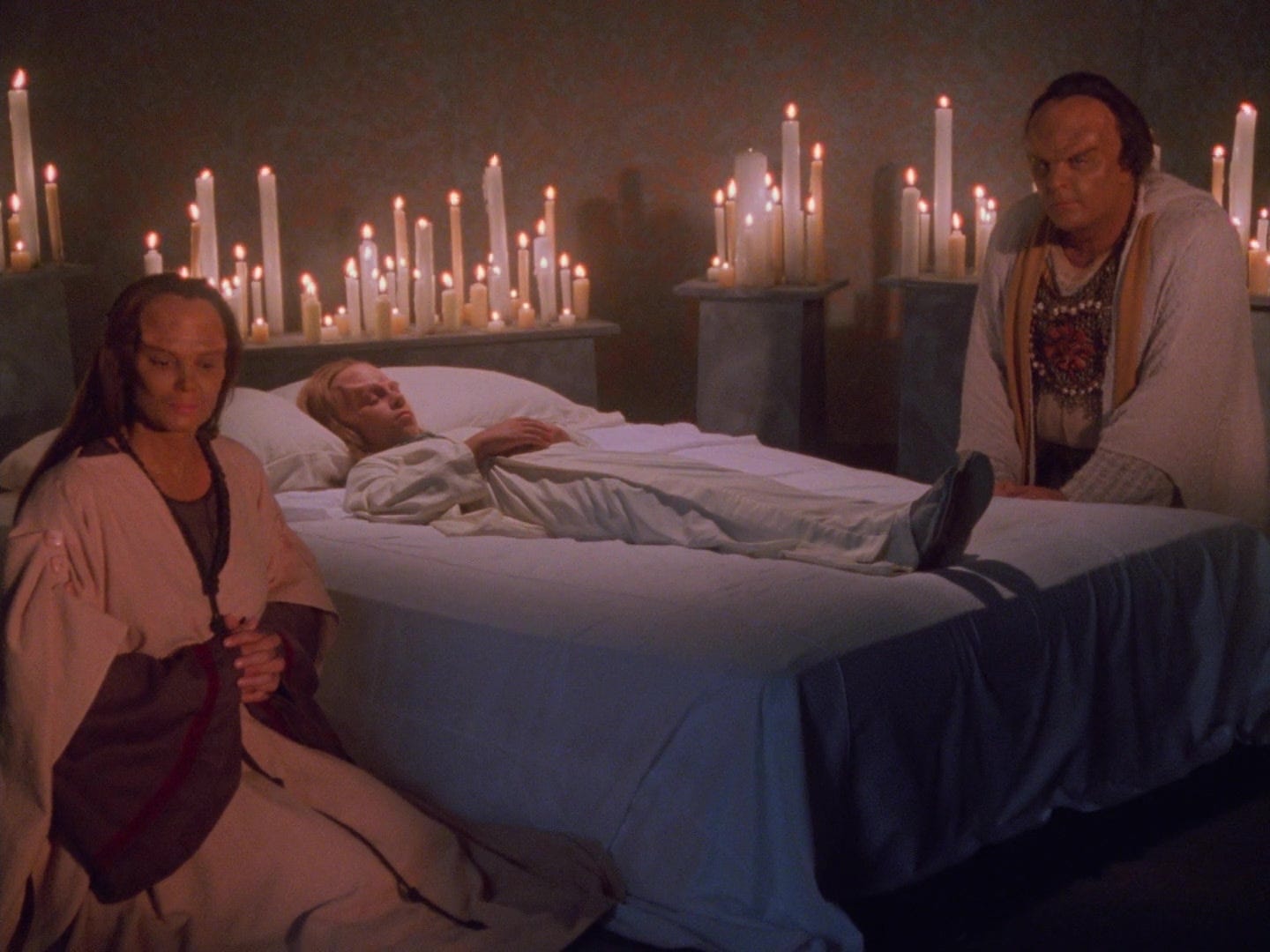
It’s not the kind of story where anyone can walk away clean. Everyone’s trapped by belief, and the choices they make could threaten the ideals they’re supposed to protect. Babylon 5 frames this as a clash of equals, but the episode's sympathy is never really in doubt.
Everyone’s a Believer
The title “Believers” draws attention to the alien parents’ religious beliefs, but as the episode unfolds it applies to the tension between them and Franklin, then to everyone aboard. The parents believe their child’s spirit will be lost if he’s “cut.” Franklin believes his Hippocratic Oath demands that he preserve life, no matter the cost. Sinclair believes in the treaty that keeps Babylon 5 neutral ground, a fragile order he must not violate. Even the ambassadors—Kosh, Delenn, G’Kar, Londo—each defer based on their own convictions about reciprocity, austerity, noninterference, and precedent.
Nobody’s impartial. Every choice in this story is an act of faith. That’s the hidden thesis: belief is universal; only the object of belief changes.
Neutrality as Principle. Or Performance?
At first glance, Sinclair’s stance seems principled. As commander, he’s responsible for maintaining Babylon 5’s legitimacy as a pluralistic space where clashing civilizations coexist. If Earth overrides alien customs every time there’s a disagreement, the experiment fails. His refusal to grant Franklin permission to operate isn’t indifference, it’s stewardship. Neutrality, he thinks, is a moral choice, a higher‑order discipline that keeps the peace.
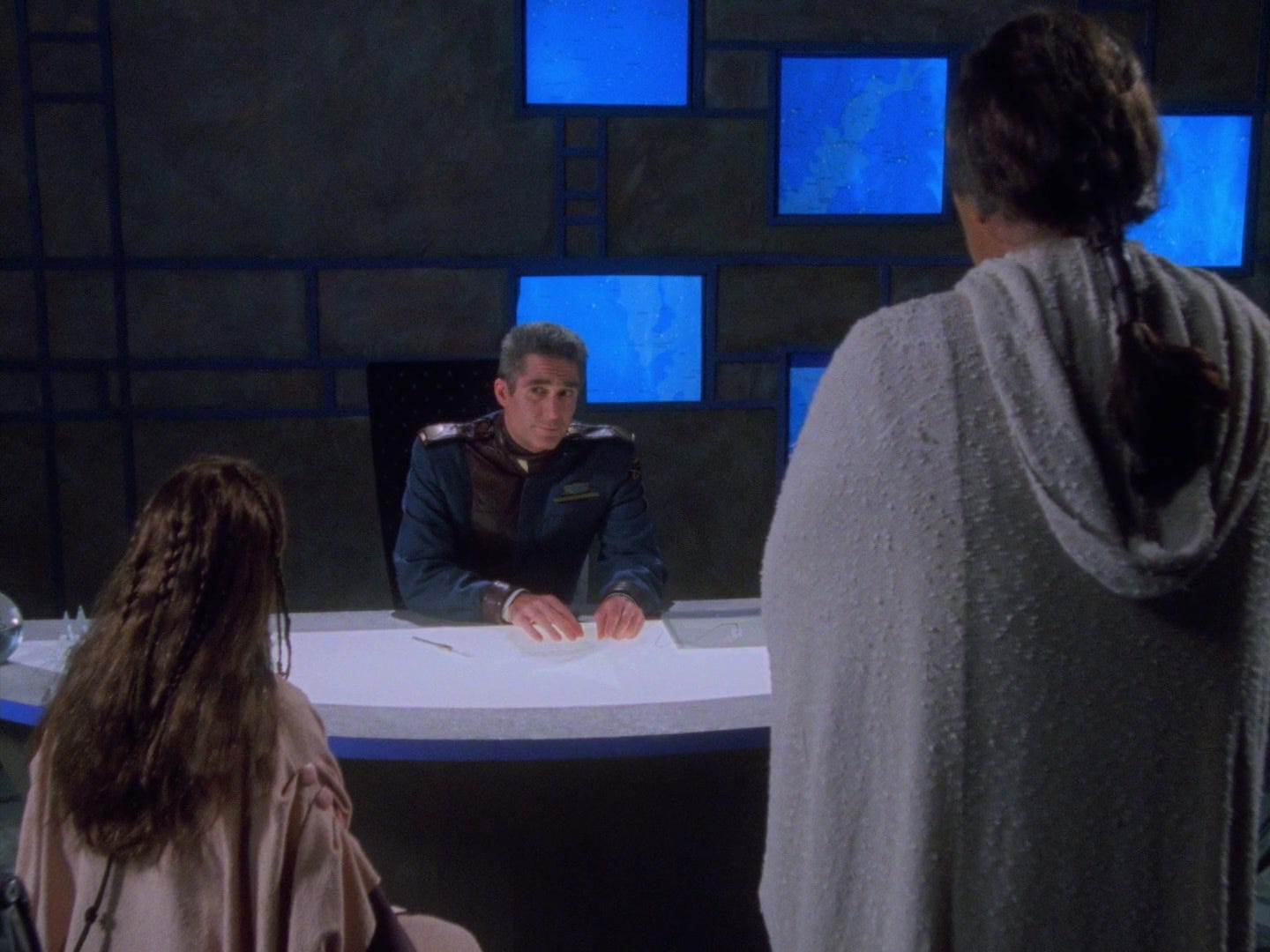
But even that ideal looks strained the moment the parents come to him fearing he’ll side with Franklin “because humans stick together.” It’s a small scene that exposes the station’s credibility problem: neutrality may be written into the charter, but alien species don't believe Earth will honor it when push comes to shove. In this way, the parents subtly push Sinclair’s hand toward the pragmatic option: sacrifice the one for the good of the many, even when “the many” are hypothetical and the one is lying right in front of you. When the boy himself says he’s willing to die, Sinclair takes it as confirmation that protocol and faith align, that letting him go honors both. But it’s a hollow symmetry. He’s choosing an abstract peace, banking on future lives, over the single life he could save right now.
Strip away the rhetoric, and Sinclair's neutrality isn’t principle—it’s performance. It’s the little league coach coming down harder on his own kid to prove he’s being fair. In trying to avoid favoritism, he overcorrects. The child’s death isn’t a byproduct of neutrality—it’s the price Sinclair pays to look neutral.
This isn’t pluralism in practice; it’s authority reflexively siding against itself. Babylon 5’s commander sacrifices a life to preserve the appearance of impartiality. That’s not moral integrity; it’s politics.
“Playing God”
Franklin’s defiance, by contrast, is vocational. He binds himself to the Hippocratic Oath. When Sinclair accuses him of “playing God,” Franklin snaps back: “Every patient who comes in that door. People want doctors to be gods.” He’s not denying the charge—he’s claiming it. His faith is that saving life is the highest good. When he operates despite orders, he’s not acting out of hubris; he’s honoring his own creed.
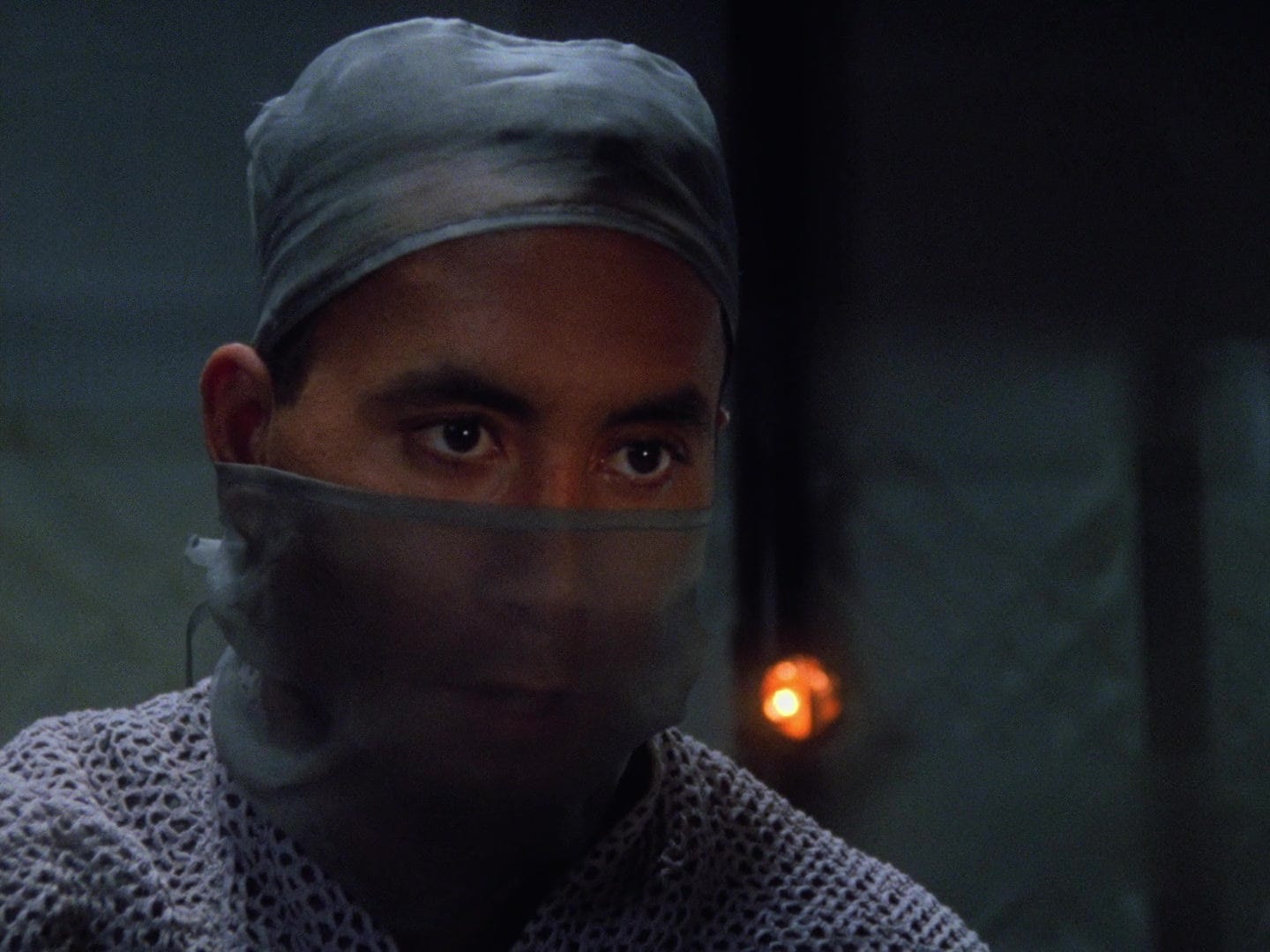
It’s a tragic irony that his efforts fail. The child survives the surgery—just as he knew he would—but is killed by his parents for being “spiritually dead.” By the episode’s logic, Franklin loses the battle. But the question lingers: does he really lose?
At first glance, Franklin seems chastened. He violated protocol and a family’s wishes, and the outcome was perhaps worse than doing nothing. His “good deed” got punished. He hurt people by caring. His final line—“What makes us human is that we have so many different ways to hurt.”—sounds like despair.
Alternatively, Franklin’s line isn’t about causing pain, it’s about feeling it. What makes humans human, he suggests, isn’t our capacity to inflict suffering, but to feel it when things go wrong. He's not disagreeing with Sinclair—he's saying that even when our best efforts end badly, the fact that we feel the pain proves we're still human. The pain is the proof we care. Franklin’s tragedy isn’t that he acted wrongly. It’s that he acted rightly and still lost.
His faith demanded he act, and he paid for it with grief, not guilt.
The Ivanova Counterpoint
The episode’s B-plot exists to echo that theme. While Franklin bleeds for his belief, Ivanova breaks protocol to enter raider territory—a risky call that succeeds. Thanks to her, child is reunited with her parents. Afterward, Garibaldi sums up both stories with one line: “Sometimes it works out, and sometimes it doesn't.”
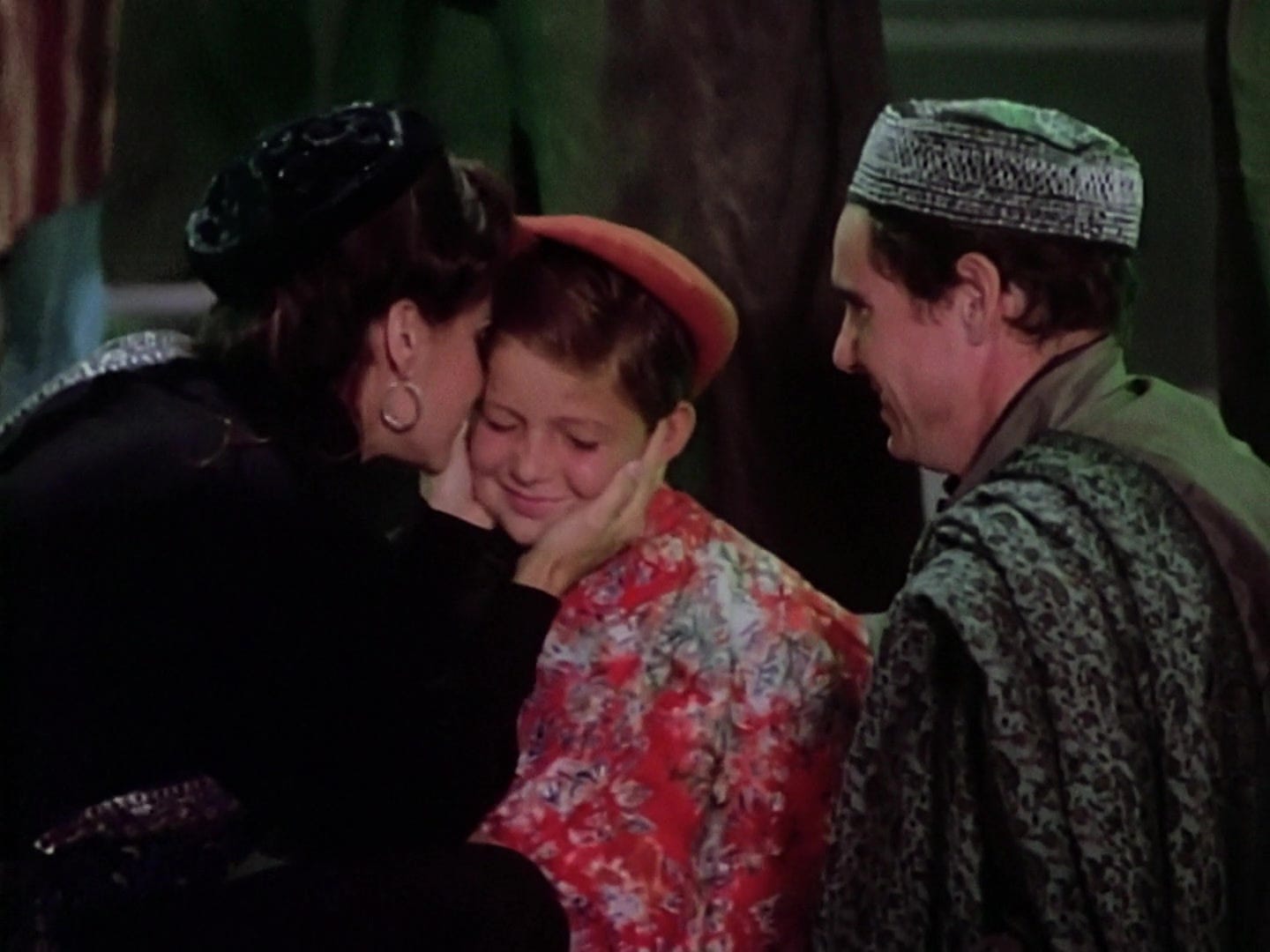
Both Ivanova and Franklin take moral leaps. The difference is luck, not principle. The episode's structure makes this explicit: doing the right thing doesn't guarantee success, but that doesn't make it less right.
The Episode Takes a Side
“Believers” may seem to masquerade as a neutral parable about faith, but its framing betrays its allegiance. The parents’ beliefs are portrayed as horrific; Franklin’s compassion, though punished, is elevated. The camera empathizes with him. The audience is meant to recoil from the parents’ logic and share Franklin’s ache. The show knows exactly which faith—life over dogma—it considers sacred.
Unsurprisingly, this age-old clash of beliefs remains a live wire in the culture today, with new wrinkles added. Issues like abortion, trans healthcare, assisted suicide operate at the very same level as the question this episode tackles. When beliefs clash, which ones do you honor? Babylon 5 doesn’t try to solve that tension, nor does it propose living with it will be easy. One of my readers informed me that Babylon 5 is sometimes the anti-Star Trek in that no-win situations do play out here. Here’s the proof.
The Pyrrhic Victor
This story offers little in the way of comfort. It doesn’t promise that faith or ethics or compassion will be rewarded—only that they’ll cost you, and that the cost is proof you still have skin in the game. If anything, the episode demonstrates that neutrality is a luxury belief: fine until someone’s dying in front of you.

If there’s a victor in “Believers,” it’s Franklin because he’s the only one who honored both faith and reason. Sinclair sticks to the bureaucratic script. The parents cling to faith that permits no external validation. Only Franklin bridges the two. He combines scientific practice with moral conviction—his Hippocratic oath grounds his faith (preserve life), while his medical training provides the means. He's the only character whose belief system integrates reason and devotion rather than treating them as opposed. It’s a victory of integrity, not of outcomes.
At least in this episode, the message is clear: conscience on Babylon 5 comes with a price.
For myself, I'm also with Franklin in this episode, summed up in his response to the "Who asked you to play God?" question: "Every damn patient who comes through that door, that's who! People come to doctors because they want us to be gods. They want us to make it better or make it not so. They want to be healed and they come to me when their prayers aren't enough. Well, if I have to take the responsibility, then I claim the authority too. I did good. And we both know it. And no one is going to take that away."
Kosh's "The avalanche has already started. It is too late for the pebbles to vote" line is a perennial favorite too.
**
This episode still generates a lot of discussion/argument to this day when people see it. I like JMS's own takes and analogies on it:
-- There's a wonderful scene in "Fiddler on the Roof" where Tevya is caught in an argument between two Rabbis. The first one makes a point. "You're right!" Tevya says. The second Rabbi makes a contradictory point. "You're right!" Tevya says. A third Rabbi, looking on, says, "Wait a minute, they can't *both* be right." "You know," Tevya says, "you're right too."
-- The thing about "Believers" is that, really, nobody's right, and in their own way, from their point of view, everybody's right.
-- Sometimes, there are no-win scenarios. And what matters then is how your characters react, what they do and say, and how it affects them. That, really, was the thrust of the episode. And to go back to your question, "Who on earth is going to side...."
The operative word in your question is "Earth." No, no human is going to side with them (although I'd point out in the Bible that there is the story of Abraham, who was quite willing to murder his own son at god's request). They're not humans. They have a wholly different mindset, cultural background and belief system. People ask for ALIEN aliens, then judge them by human standards, and feel it's wrong if they don't behave like humans. These didn't. That's who and what they are. If humans side with them, or accept them, doesn't enter into it.