
S01E15: “Grail”
[1994.07.06] A man comes to Babylon 5 asking seeking information that can help him with his quest to find the Holy Grail, while a Downbelow gangster evades justice by mindwiping all who oppose him.

This episode is a remarkable pivot from the last one. “TKO” tried to tell two stories about duty and honor and failed at both. “Grail” tells one story about searching for meaning—and actually earns its ending.
The Seeker of Lost Causes
The episode centers on Aldous Gajic (played by David Warner, whom sci-fi fans will recognize from just about everything, including Tron and some of the best Star Trek installments). He is a “true seeker,” the last of a sect hunting for the Holy Grail. To the humans, he’s a nutcase with a staff; to the Minbari, he is a figure of immense honor.
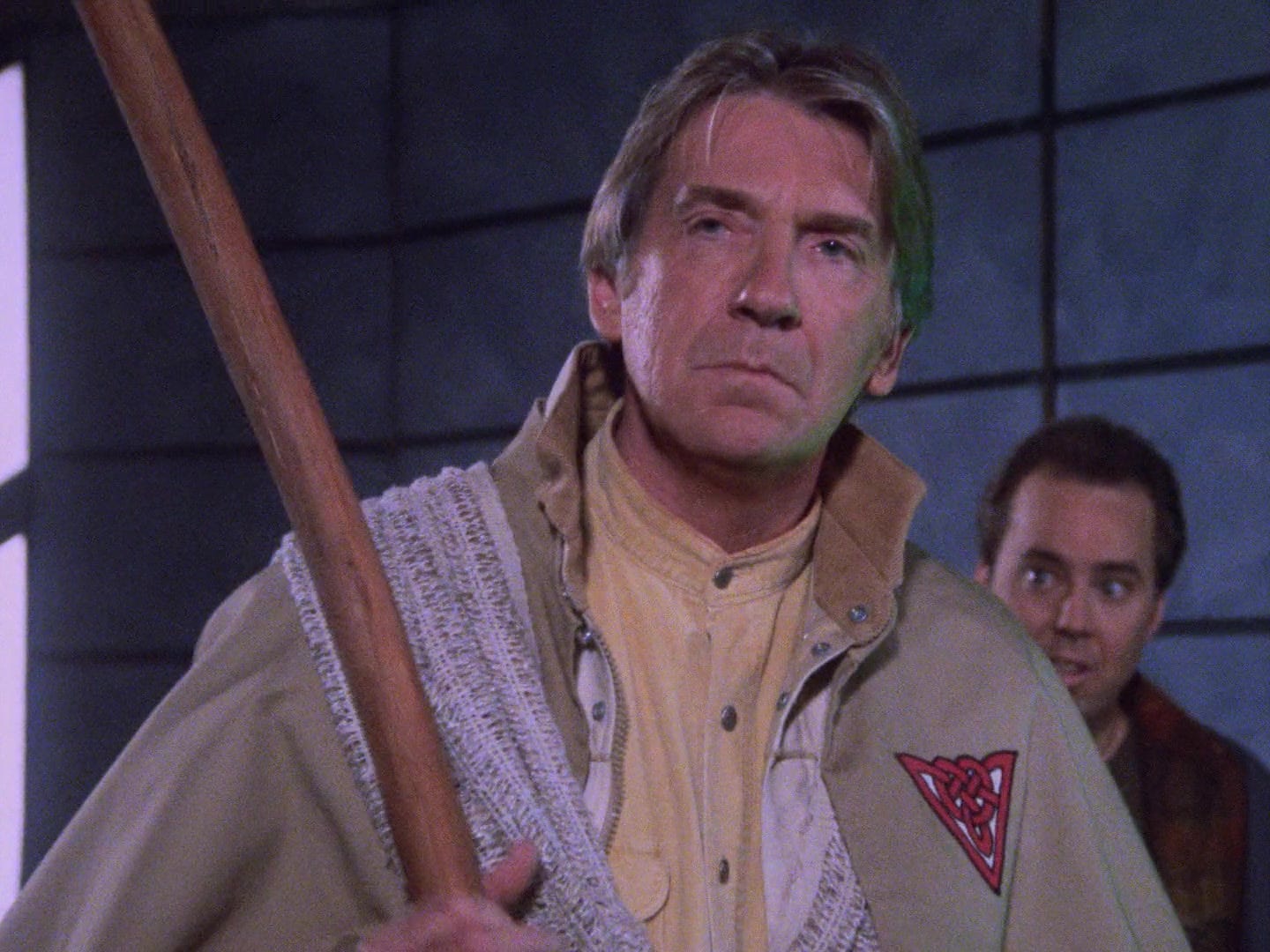
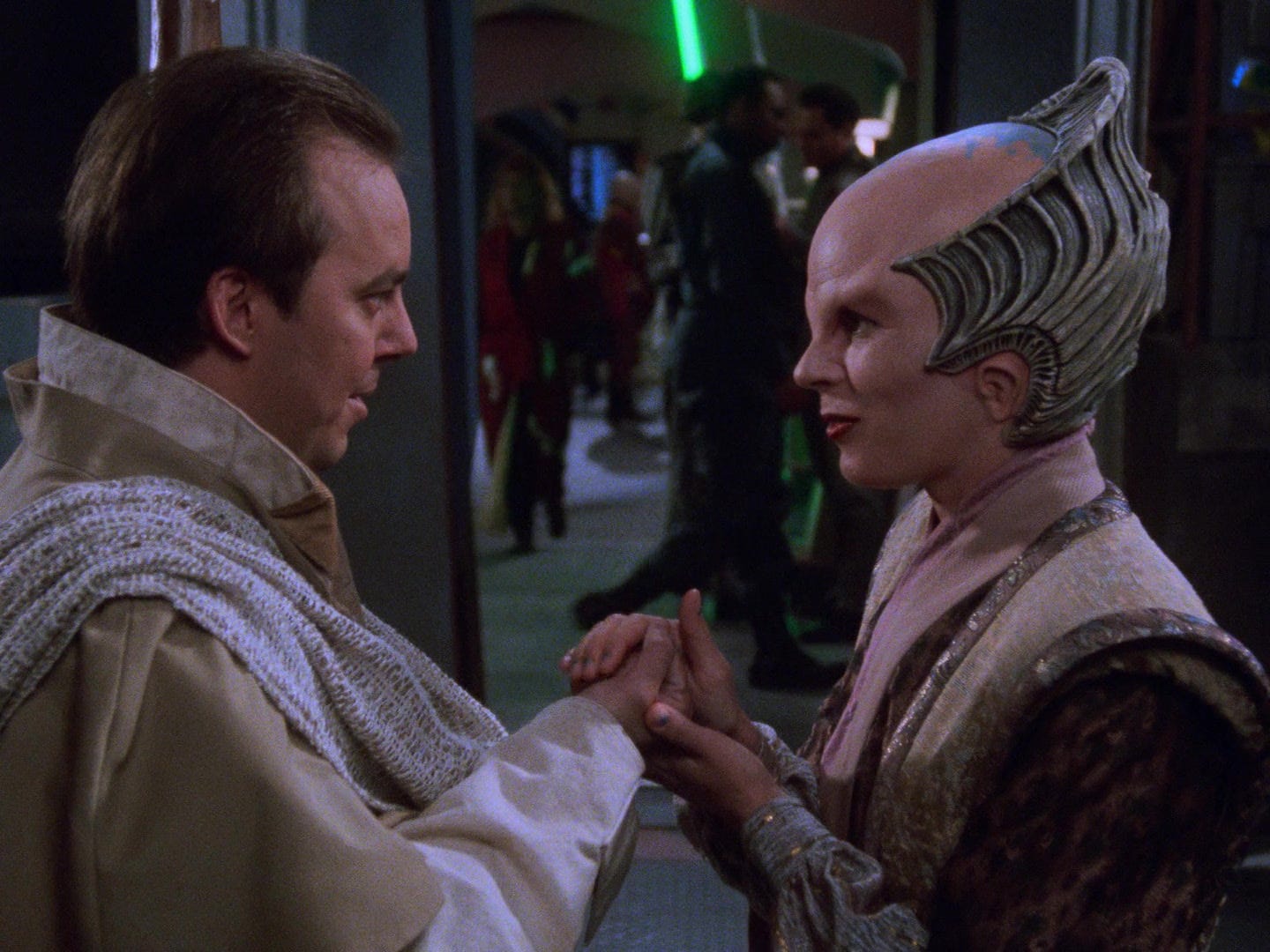
The contrast here is vital. Delenn is visibly confused that Sinclair doesn’t take Aldous seriously. In her eyes, the seeking is the holy part, not the object itself. She even suggests—in that classic Delenn cryptic fashion—that Sinclair himself is a seeker. This feels like more than flavor text; it’s a nudge toward the “missing time” mystery that still has the show by the collar.
Then we have Jinxo—real name Thomas Jordan—a pickpocket who believes he is the human embodiment of the “Babylon Curse.” He believes this because he worked construction on every previous Babylon station up until the moment it was destroyed. This is some of the first tangible backstory we get on the previous stations. B1 and B2 were both sabotaged while Jinxo was on leave. B3 blew up, earning him the nickname “Jinxo.” And B4 just “wrinkled up” according to Thomas right after he left.
Thomas thinks he’s the reason, and desperately begs to remain aboard the station when a judge sentences him to leave. Aldous, seeing his distress, convinces the judge to release Jinxo into his custody. As the men get to know one another, Aldous reframes the “curse.” If Thomas is the only one who survives every catastrophe, he isn’t jinxed—he’s lucky.
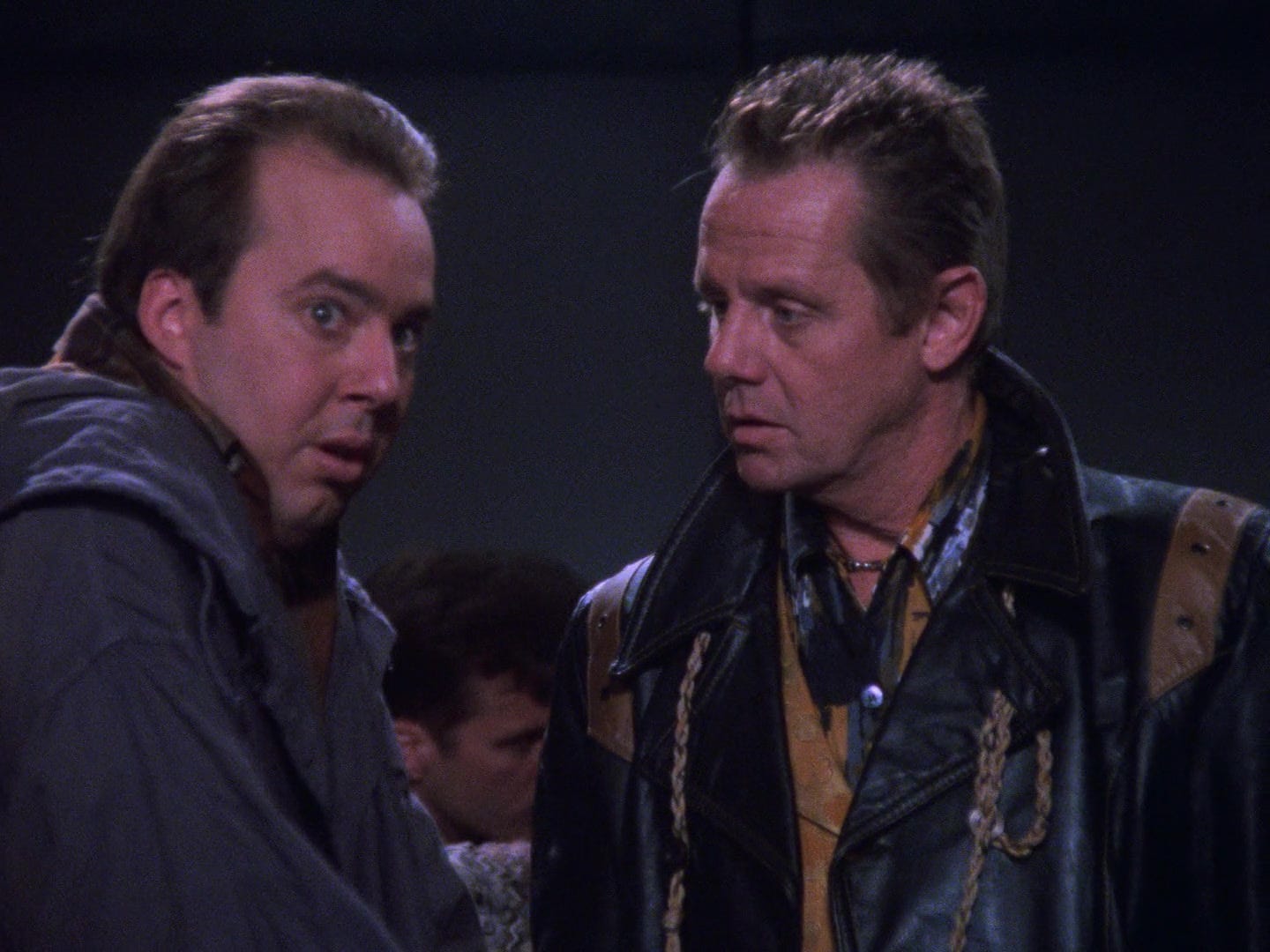
In the end, Aldous dies protecting Thomas and bequeaths him his quest. Thomas accepts it, symbolically completing Aldous’ journey as well as breaking his own curse. When he rejects the name “Jinxo” and declares himself “Thomas,” the show completes a character arc that began with a comic-relief pickpocket and ends with a dignified holy man in a moment that felt earned, despite the story’s brevity.
There is a thematic contrast here with “Signs and Portents.” In that episode, the mysterious Morden asked the ambassadors, “What do you want?” It was a transactional question, aimed at the destination. In this episode, Aldous ostensibly seeks an object, but as we learn, his quest is about the search itself. Whether or not Aldous even believes the Grail exists to be found is secondary.
There’s another moment worth noting. While accompanying Aldous on his search, Thomas mentions how nice the Minbari are, and Lennier explains that the Minbari religious caste and warrior caste are completely separate. Then he adds—almost as an aside—that it’s a terrible thing when both sides of Minbari culture agree, and Delenn hopes it never happens again. That’s a loaded statement. If both castes agreeing is terrible, what did they agree on during the Earth-Minbari War? To attack humanity? To surrender at the moment of victory? The show doesn’t answer this yet, but it’s planting seeds. Store that one.
This casts some possible light on Sinclair’s search for answers about his missing time, why the Minbari chose him, and what happened at the Battle of the Line. Delenn sees that. She recognizes a seeker. The question is: will Sinclair find what he’s looking for, or will he find something else entirely? Aldous never found the Grail, but he found Thomas. Maybe Sinclair’s search will work the same way.
Life in Downbelow
We’ve seen the Downbelow before (notably in “Survivors”), but “Grail” makes it feel like more than just a place for Garibaldi to hide. Sinclair’s exposition dump about the “Lurkers”—the people too poor to leave but too broken to stay—reframes the station. Babylon 5 isn’t just a UN building in space. It’s a self-contained city, a liminal space that has become permanent, and a home for people who have nowhere else to go.
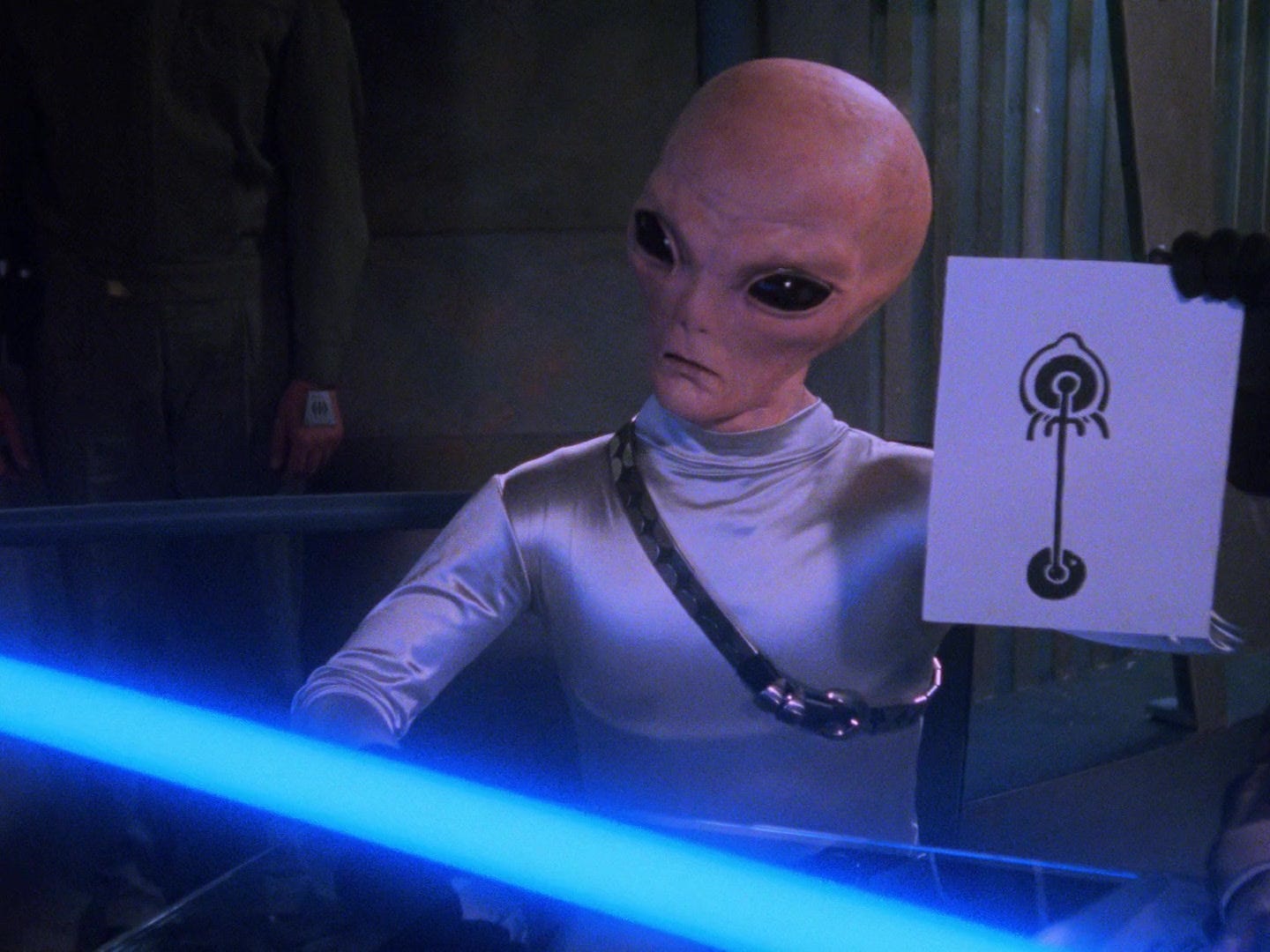
Downbelow, we meet Deuce (William Sanderson, doing what he does best). He’s tying up loose ends that could land him in prison using a Nakaleen Feeder—a squid-like brain-mulcher—housed in a fake Vorlon encounter suit. I’ll be honest: I was never fooled. The moment the squid thing started sucking out synapses, the question wasn’t “Is Kosh evil?” but “What trick are the writers pulling?” We don’t know what Kosh looks like, so it’s entirely plausible to the characters (and perhaps a more gullible audience) that he’s a sentient calamari with a hunger for memories.
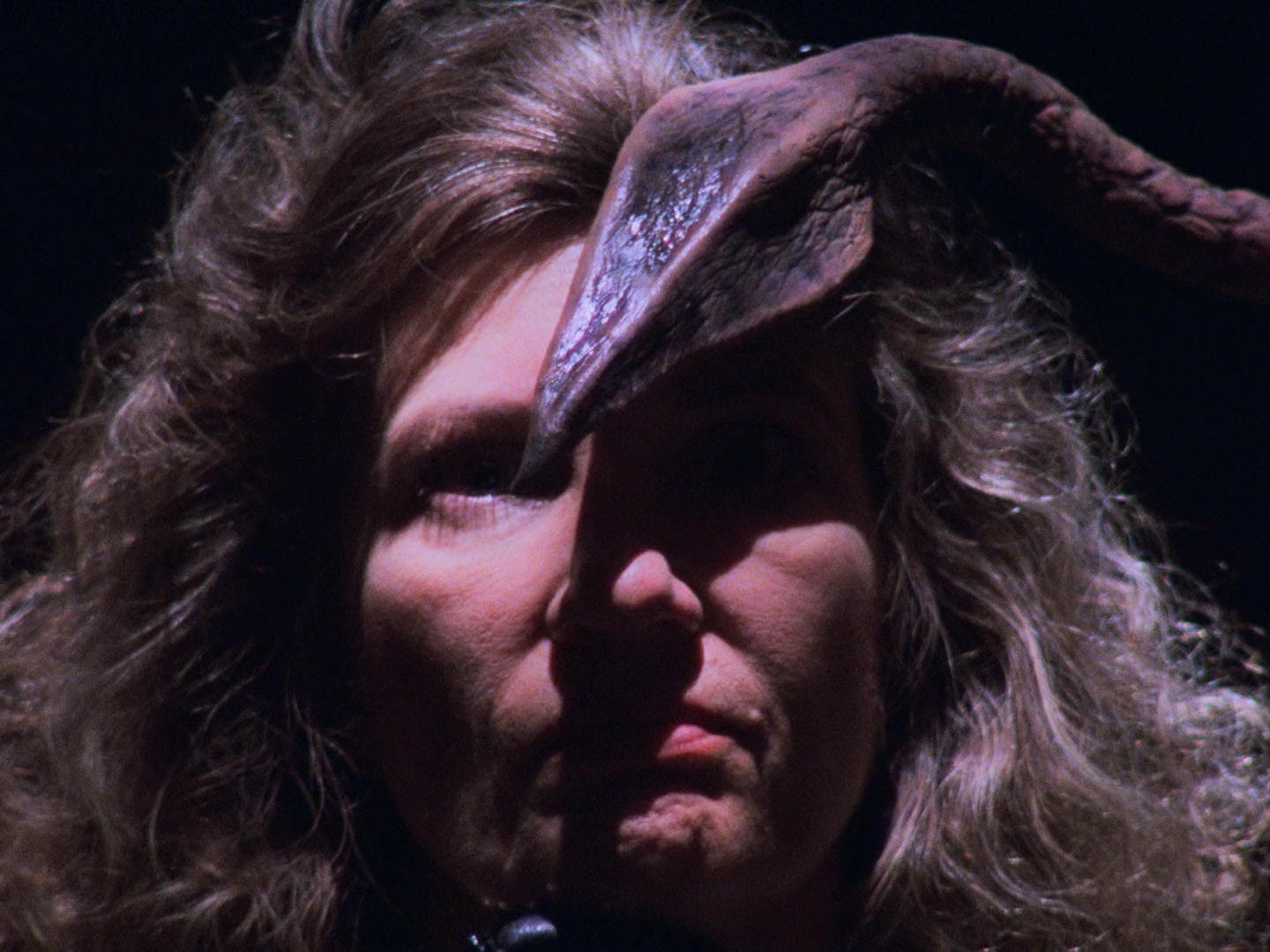
Londo’s reaction to the Feeder is a highlight. The moment he hears a Centauri-jurisdiction brain-eater might be on the loose, he abandons the casino to hide in his quarters. It establishes the feeder as a serious threat, but played through Londo, it also becomes a running gag as he and Vir cower while the two of them never come close to encountering the creature. Garibaldi, never one to miss an opportunity to antagonize Londo, manages to keep the Centauri on edge even after the threat is eliminated.
Storytelling Craft
The immense contrast between this episode and the one preceding it got me thinking about why some stories land while others crash. The difference isn't just in the caliber of the acting—though Warner could sell a grocery list as a sacred text—it’s in the architecture of the story. “TKO” gave us Walker proving he could fight and Ivanova finally mourning—both arcs resolved without changing anything fundamental about the characters or the world. Walker leaves. Ivanova returns to duty. The episode ends where it began.
“Grail” does something smarter. Aldous dies, but his quest doesn’t. Thomas transforms from a superstitious pickpocket into someone with purpose. The episode closes Aldous’s story but opens Thomas’s, and in doing so, it leaves something behind. Thomas will carry that staff off-station, and we’ll wonder: will he find the Grail? Does it matter if he doesn’t? That lingering question is what makes the episode stick.
Good episodic storytelling isn’t just about resolving the plot—it’s about leaving the world slightly changed. “Grail” does that. “TKO” didn’t. By the time the credits roll, Thomas isn't just a jinx anymore, he's a seeker. And the station crew, who definitely don't believe in curses, hold their breath until his ship clears the docking bay. Just in case.
I didn't care for this episode as a whole, I like the moments with Delenn, comedic stuff, but for me it was just slightly above TKO (which was carried by Ivanova's story).
So it's always funny to see people liking it more, especially conisdering that I think that the first season is not bad, just ok-ish on average, while half the interenet seemed to have declared that B5 is "unwatchable", and people "couldn't get into it" after a couple of episodes (some wish for a world peace, I'm more petty, I want that people who say it to be stuck in a room rewatching the first season of TNG for a year or ten).
It's the first and one of the the few roles of Jinxo actor, Tom Booker, who's mostly a comedian, he acts quite ok for the occasion, but I've always found him to be somewhat distracting. I coudln't quite decide if he slightly misses the role, or was his miscast and someone else would've been better.
Maybe the director, Richard Compton is part of the problem, I think I wrote in the pilot that he's to blame for the terrible look it had. He did one or two more episodes in this season and was later not invited back to continue in season 2 unlike directors of most other episodes you've seen, so maybe his skill has something to do with my mediocre reception of this one.
Didja catch the joke about the ship Jinxo left on?
"The transport Marie Celeste, which Thomas boarded at the end of the episode, is a reference to a sailing ship found adrift on the sea in 1872 by the crew of the ship Dei Gratia. The Celeste's crew was missing, as was her single lifeboat, but there were half-eaten meals in the mess hall and other evidence the crew had left suddenly. Investigators found that Captain Morehouse of the Dei Gratia had dined with Captain Briggs of the Celeste the night before departure, and Morehouse and his crew were tried for murder. There was no hard evidence, and they were acquitted. The missing crewmen were never found."
JMS had this to say about it: "Yeah, it was a bit of *really* perverse humor...Jinxo survives all five Babylon stations, and leaves thinking all is well...on a ship named the Marie Celeste? We're a sick bunch, but we're fun."
The answer on the castes agreeing being a bad thing is given in 2 more episodes in "Legacies," as I recall it, so... you're almost there!