
S01E20: “Babylon Squared”
Babylon 4 reappears at the same place it disappeared four years earlier. Sinclair and Garibaldi lead an expedition to evacuate its crew. Delenn is summoned by the Grey Council.

Thus far, I have clocked a number of shifts in the way Babylon 5 approaches narrative craft as it moves from episodic to serialized storytelling. In “Babylon Squared” the shift occurs in the narrative itself. Almost everything we’ve seen so far has been in service to worldbuilding. That entails a lot of looking-backward, establishing the in-universe history, and in a couple of cases, episodes that feel more like a review than an installment. I don’t want that to sound more critical than I mean it to be. It is a testament to the writing staff that they managed to produce two callback episodes that still delivered directional momentum to the story. So far, only “TKO” has felt like filler to this first-time viewer.
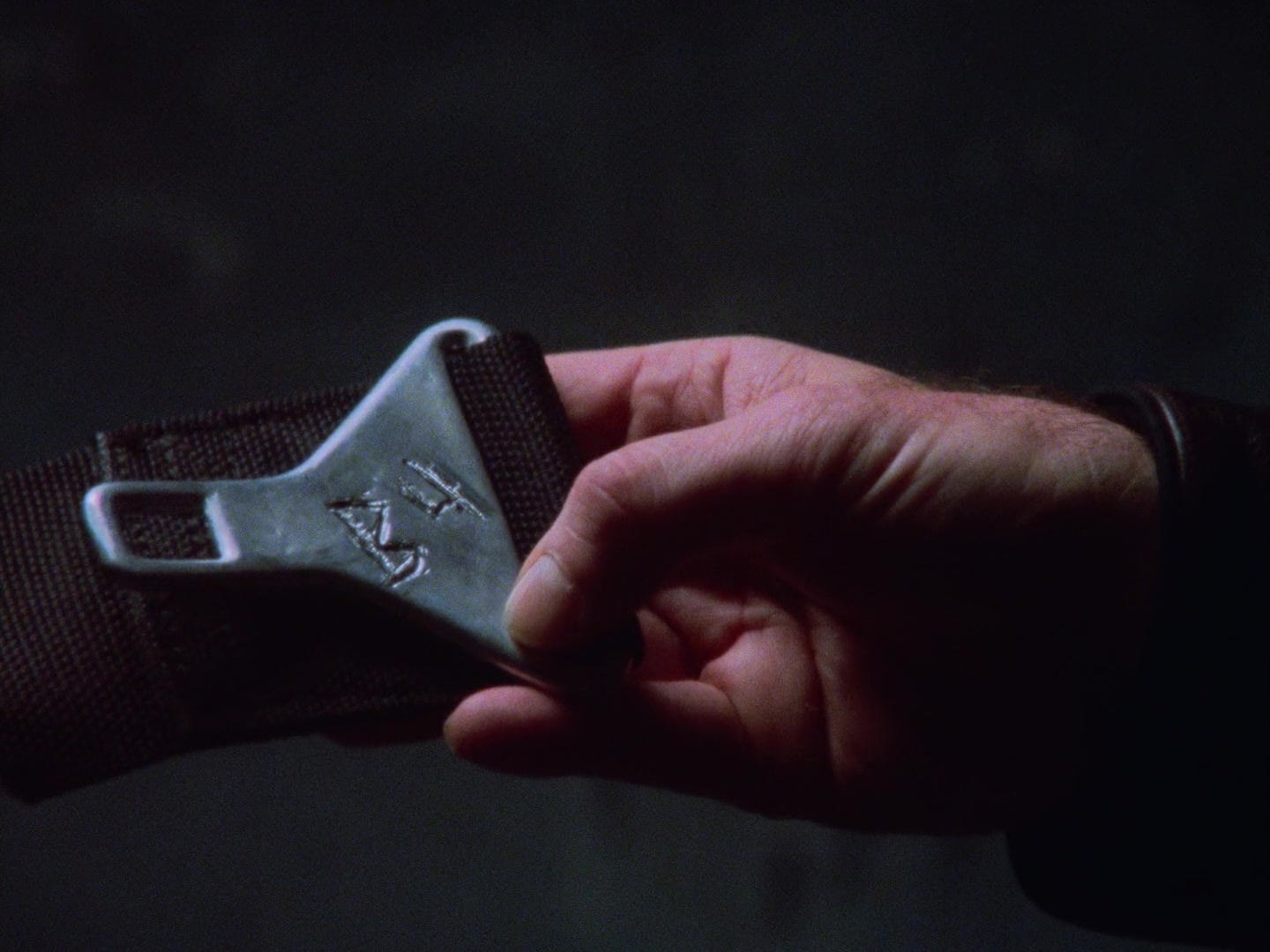
“Babylon Squared” directly address some major plot points that have maintained a rearview from episode one and refocuses attention through the windshield. Elements of those worldbuilding mysteries remain, but they are partially resolved and partially reshaped so that they are no longer the most interesting thing happening on Babylon 5. Instead of looking forward to finding out what happened, we can now look forward to finding out what is about to happen.
Mysteries Past and Future
As of this episode, the Earth-Minbari War is effectively squared away. We know that it was precipitated by the death of Dukhat, a great Minbari leader. We know the hole in Sinclair’s mind relates to him being interrogated by the Council. And we know that the Minbari shepherded the Babylon project along with Sinclair into his role as commander.
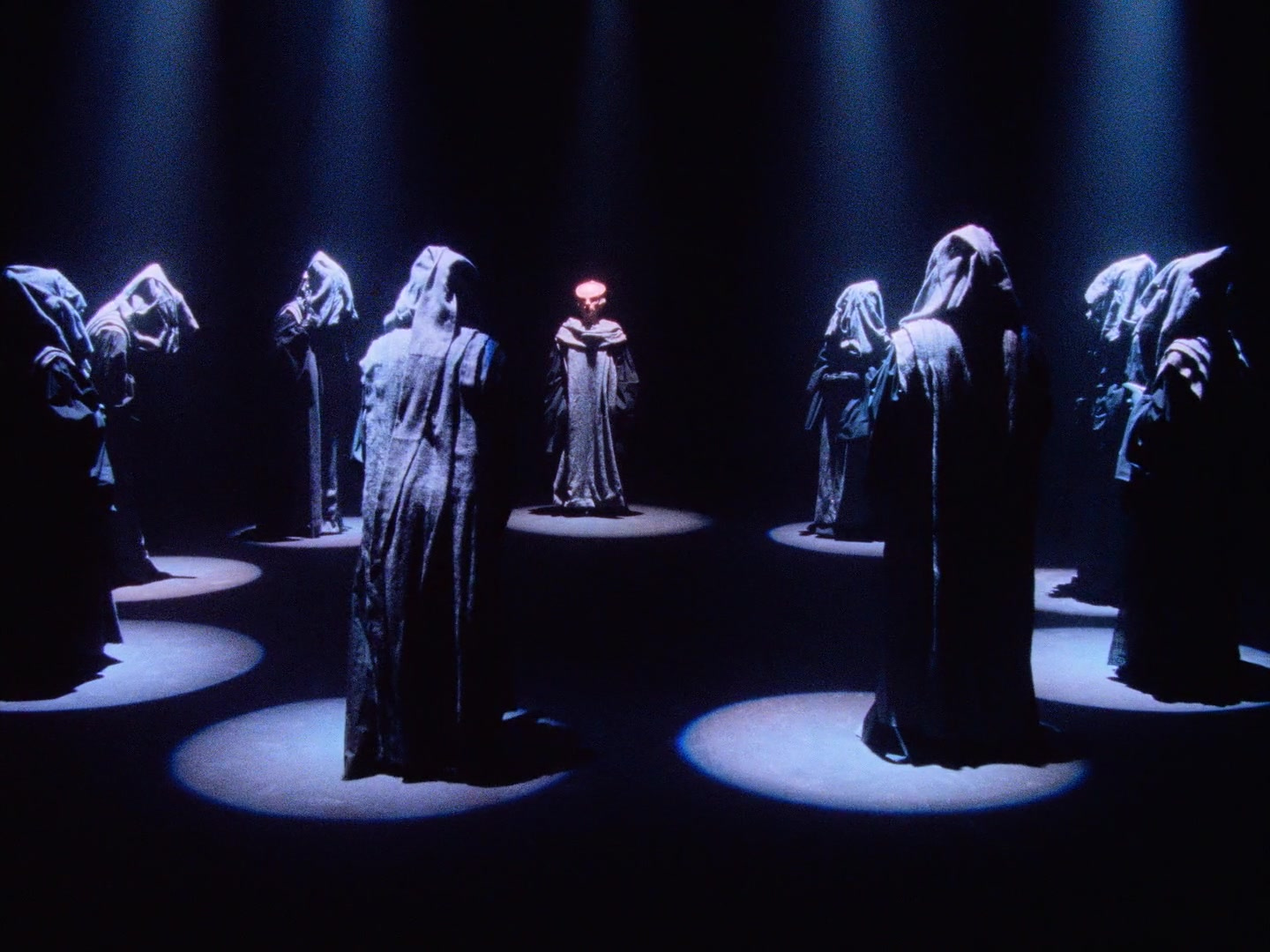
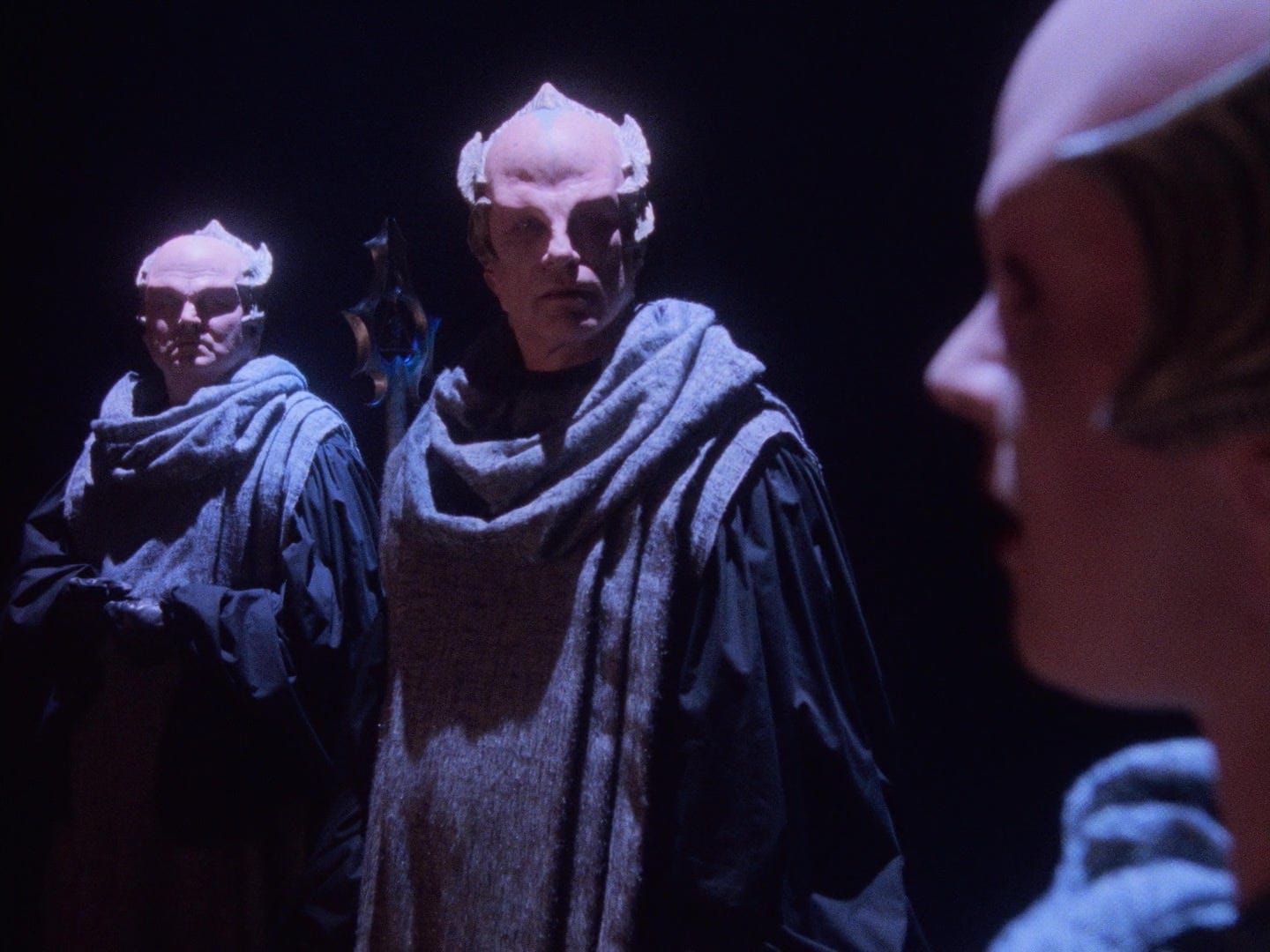
The last large pieces of that puzzle get filled in when Delenn is called before the Grey Council. They have elected her to replace Dukhat, an immense honor that she shockingly turns down. Her explanation fills in the remaining backstory. Her mission aboard the station, monitoring Sinclair, encouraging him toward his destiny, has been to verify the prophecy the Council received that led them to surrender the war. What they saw isn’t described specifically, but it is a destiny they cannot interfere with, and we can reasonably attach that to what we learn about Sinclair in this episode.
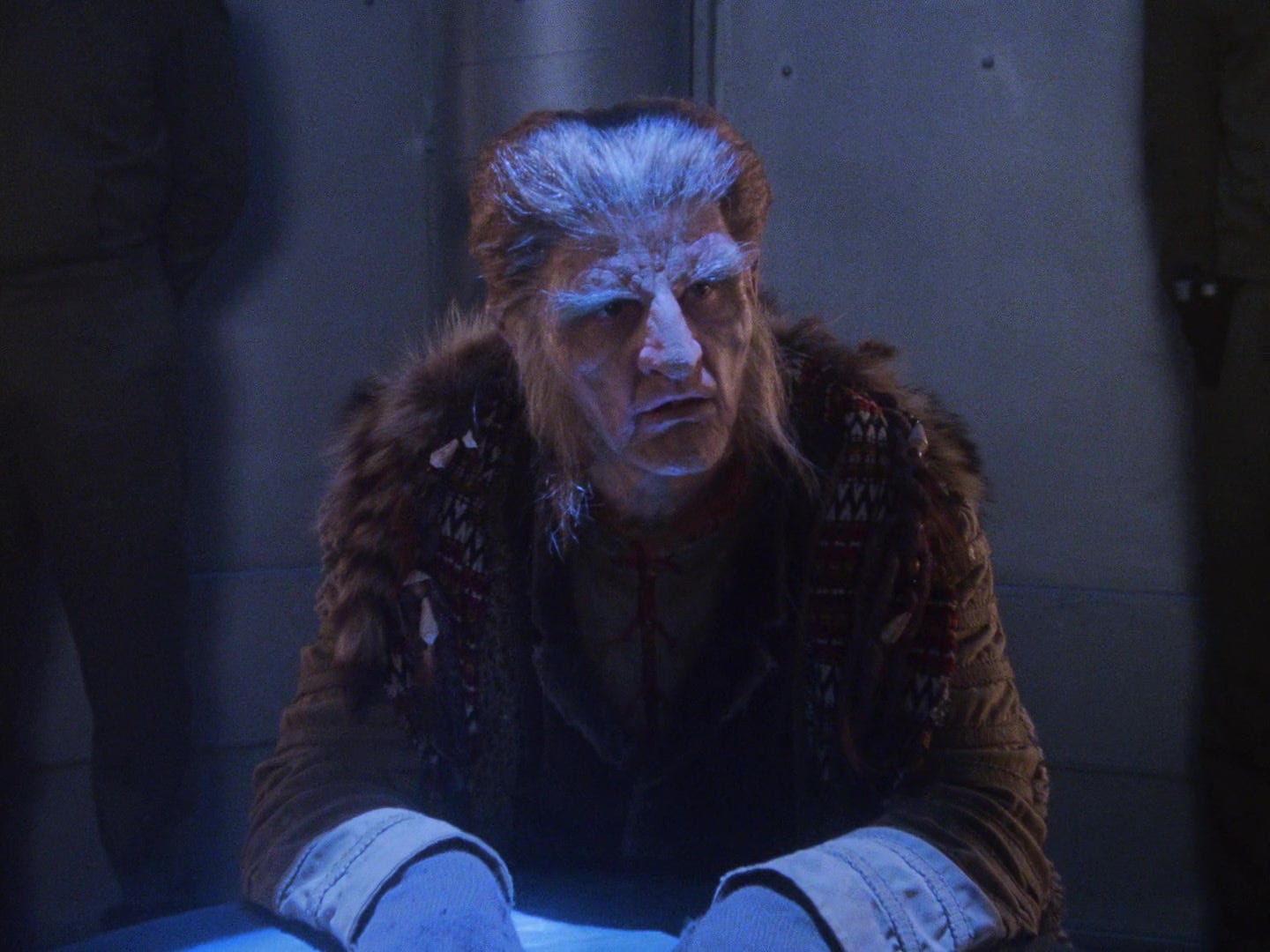
The weirdest mystery so far in the series has been the fate of Babylon 4, the iteration of the project that “wrinkled up” after the first three stations were destroyed by sabotage. A partial answer to that mystery comes in the time-travelling twist that drives the episode. Babylon 4 reappears, but it is caught in a time distortion. Sinclair mounts a mission to rescue the crew trapped aboard. The story is a bit rushed, but he soon encounters Zathras, a strange alien who speaks only in third person and is devoted to “The One.”
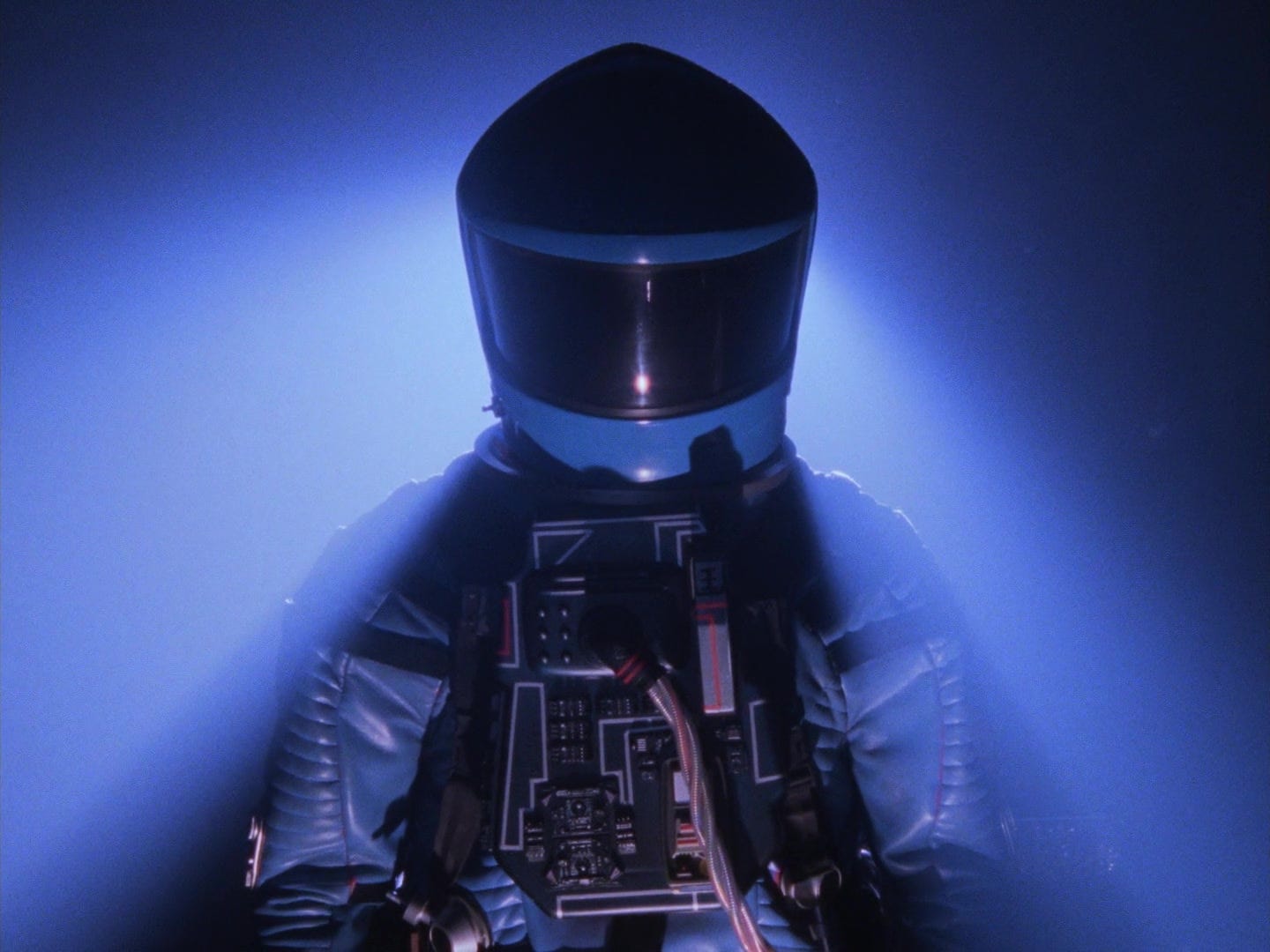
Zathras lays out a new set of stakes: a great war, the potential destruction of everything, but also a great opportunity for great peace. He says Babylon 4 is being pulled through time to save the galaxy. When a figure in a blue space suit appears, fading in and out, Zathras identifies him as the One and explains that he is holding the space station still in time to let the crew off at great personal pain. The last thing Zathras says to Sinclair before the evacuation is complete is to tell the commander once again that he has a destiny.
We don’t need to wonder about it long, however. The One returns for Zathras. He removes his helmet and is revealed to be an older, scarred Sinclair. “I tried to warn them. But it all happened, just the way I remembered,” he laments. The effectively answers the question of what did the Minbari do with Sinclair but replaces it with the question of what Sinclair is going to do in the (his) future.
Some specifics remain unaddressed, such as the particular circumstances surrounding Dukhat’s death, but it may be enough to go forward simply knowing that it happened. (Although, I suspect the truth of the matter will eventually come out.) And while we don’t know exactly what it is about Sinclair that made the Council change their minds about Earth, but this glimpse into his future is plenty to give us some idea.
The Madman Theory of Humanity
Delenn rejects the head role on the Grey Council because she believes she has a greater calling, to continue observing humans and verifying the veracity of the prophecy that ended the war. She says a lot of things about the human spirit that would have been at home in James Kirk’s mouth: humans don’t surrender, they succeed against impossible odds, hurt them, they only come back stronger. After her speech, I don’t even feel curious about the specifics of the prophecy because the way Delenn puts it, “humans are the future” could just be a broad prophecy to say human resilience is undefeated, you’re better off siding with them than against them.
For a show that is very much about subverting tropes, it’s strange that it should adopt this one that was already stale in the 90s. However, when you look at the Minbari—who are bound by prophecy and rigid hierarchy—human unpredictability must look like a superpower—or a threat. Delenn identifies our one weakness as not knowing our own greatness, which she describes as a capacity to walk among the stars like giants. That contradiction could be rightly terrifying to the Minbari. From that perspective, it’s less Trek optimism and more “a species of toddlers playing with hand grenades.”
Sci-fi has always been a mirror for contemporary anxieties, and the human unpredictability trope could be a nod to Madman Theory despite the 1990s being a point history where that worry was not so top of mind. It would speak more to the 1970s—or to now. The concept was famously associated with Richard Nixon, who wanted to convince world leaders he was volatile and irrational so they would avoid provoking him. It’s also how fans of a certain orange president read current foreign policy, while policy critics claim to believe that the madness is genuine. Either way, it’s a mixed bag. Unpredictability erodes the stability required for long-term alliances and trust. The very thing that makes a leader dangerous to enemies also makes their allies nervous.
Some on the council think humans are primitive. Delenn says the Minbari have much to learn from humans. It will be interesting to see whether and how this tension between allies with differing paradigms plays out in the series.
The Election of Delenn
I’ve been keeping some mental distance from Delenn’s character—she has been nothing so far if not cagey—but this episode allowed me to trust her more. Seeing her choose a lonely, banished life on a primitive station over the literal throne of her people proves she isn't a manipulator; she’s a believer.
Staying on B5 is not a cushy job. Another member of the Grey Council assumes she would be relieved to not return. Moreover, rejecting the call to leadership means that she will be permanently exiled from the inner chamber of the council. But she chooses to return to B5 because she hears a greater calling.
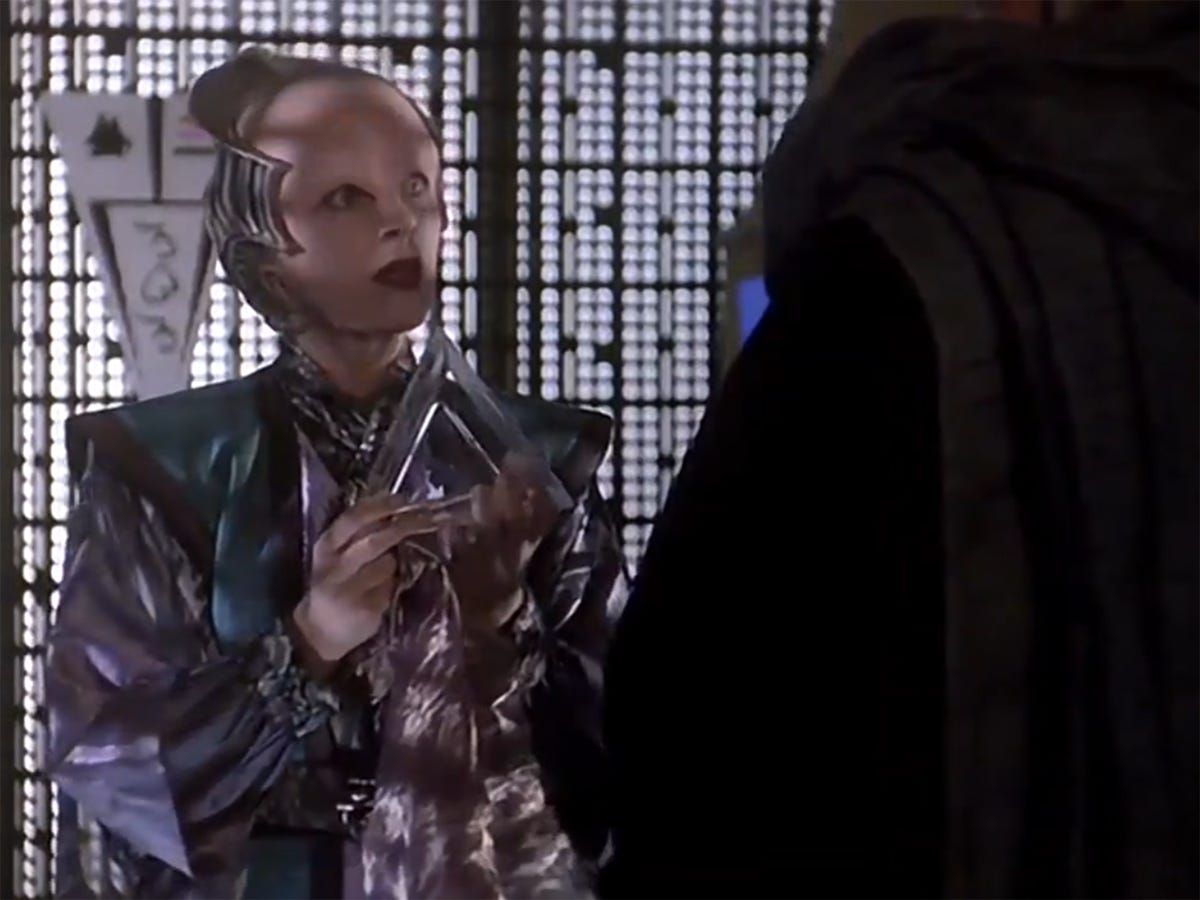
She’s not quite a martyr, but she is now a free agent. She’s siding with a future she believes in, even if it costs her everything. Her exile and the gift of the Triluminary (that glowing triangular device) suggest she is preparing for a conflict her own people are not yet ready to acknowledge.
Signs and Portents
The title of this episode is a clever bit of arithmetic. While it literally refers to the reappearance of the missing Babylon 4, “Babylon Squared” functions more as a thematic balancing of the scales. For nineteen episodes, the series has been a whodunit, obsessed with the shadows of the Earth-Minbari War and the hole in Sinclair’s mind. By the time the credits roll here, the past has been largely settled, and the future is suddenly, terrifyingly looming. We have moved from investigating a crime to preparing for a catastrophe. It is no longer a question of what happened, but rather, what’s coming?
The atmosphere of the episode is best captured by Garibaldi's closing thought: Babylon 4 is a Flying Dutchman, a ghost ship forever drifting through the currents of time. The viewer feels caught in a similar current when Delenn's friend speaks of “signs and portents,” invoking the title of Episode 13, that earlier hour of cryptic warnings, Morden's arrival, and a prophecy of Babylon 5's eventual destruction. Sinclair’s vision of a station under fire—that frantic flash-forward of hull breaches and gunfire—echoes that prophecy, and suddenly the ghost ship isn't just Babylon 4.
As we see our Sinclair return to the relative safety of B5, confident but confused, we now know that an older, scarred version of him is already out there in the temporal slipstream, struggling to warn a past that won’t listen. The clock isn’t just ticking; it’s looping.
"[T]he past has been largely settled, and the future is suddenly, terrifyingly looming. We have moved from investigating a crime to preparing for a catastrophe. It is no longer a question of what happened, but rather, what’s coming?"
Yep, this is the turning point, where we move on from the prologue and intro to the main story. Some of the questions you still have will be answered very soon, others will still take a bit, and the very next episode is still arguably a 1-off (though the plot McGuffin is brought back a few times over the years, so it's still a long-term tie-in after all). But yeah, this one and Chrysalis and we are off to the races.
So when I wrote about episodes being out of order, this one is supposed to be the earliest one, several episodes back. 'Legacies' happens about now, towards the end of the season.
So one of the minor serialized things that doesn't really matter but changes some stuff is Delenn's play for the body of Brenner. For me it might seems different in a context of knowing that by rejecting her role, her status as a Grey Council member is questionable too from what she was said, and instead of being meek, she comes up with a con that might lead to repercussions (and might not?) and then flaunts and uses her questionable status when she's found out.
And yeah, this episode teases and sets up future stakes very well compared to other shows that did future predictions too, but at the time I was watching it, this one felt weighty, other ones felt like nothing burgers. Still don't know why, maybe because the prediction doesn't feel like it's slapped on onto a one off episode? But I didn't quite know it wasn't a one off