
S01E16 “Eyes”
[1994.06.13] Sinclair's decisions of the last year catch up with him, when an internal affairs investigator arrives to test the crew's loyalty to Earth Force with the help of a telepath.

A few times now, Babylon 5 has proven that you can earn emotional stakes in 40 minutes, as with “Believers” and “Grail.” In contrast, its ambitions in the way of spinning political intrigue is starting to press the time constraints. This is not a bad thing. The only thing I can say against “Eyes” is that it resolved too quickly, and even that criticism is tempered by the fact that the resolution isn't really a resolution at all—it's a stay of execution. Internal affairs arrives to remove Sinclair from command, and he wins this round by making the investigator losing his cool and the telepath switching sides. It reads more like luck than planning, but maybe that's the point: the episode rewards viewers for paying attention to earlier threads while making clear this isn't over.
The Right-Sized B-Plot
First, praise for the B-plot. Lennier takes interest in Garibaldi’s hobby project of reassembling a 1992 Kawasaki Ninja ZX-11 from scrounged parts. What starts as a history project for the mild-mannered assistant soon captures his imagination as a symbol of sexual prowess and rebellion. At one point, he is seen chanting over the fuel injection system. Across relatively few beats, we see Garibaldi move from annoyed to impressed as Lennier not only completes the project, but modifies it with a Minbari energy source (gasoline is no longer available). The episode ends with the pair driving the bike through Babylon 5's corridors, diffusing an otherwise tense hour.
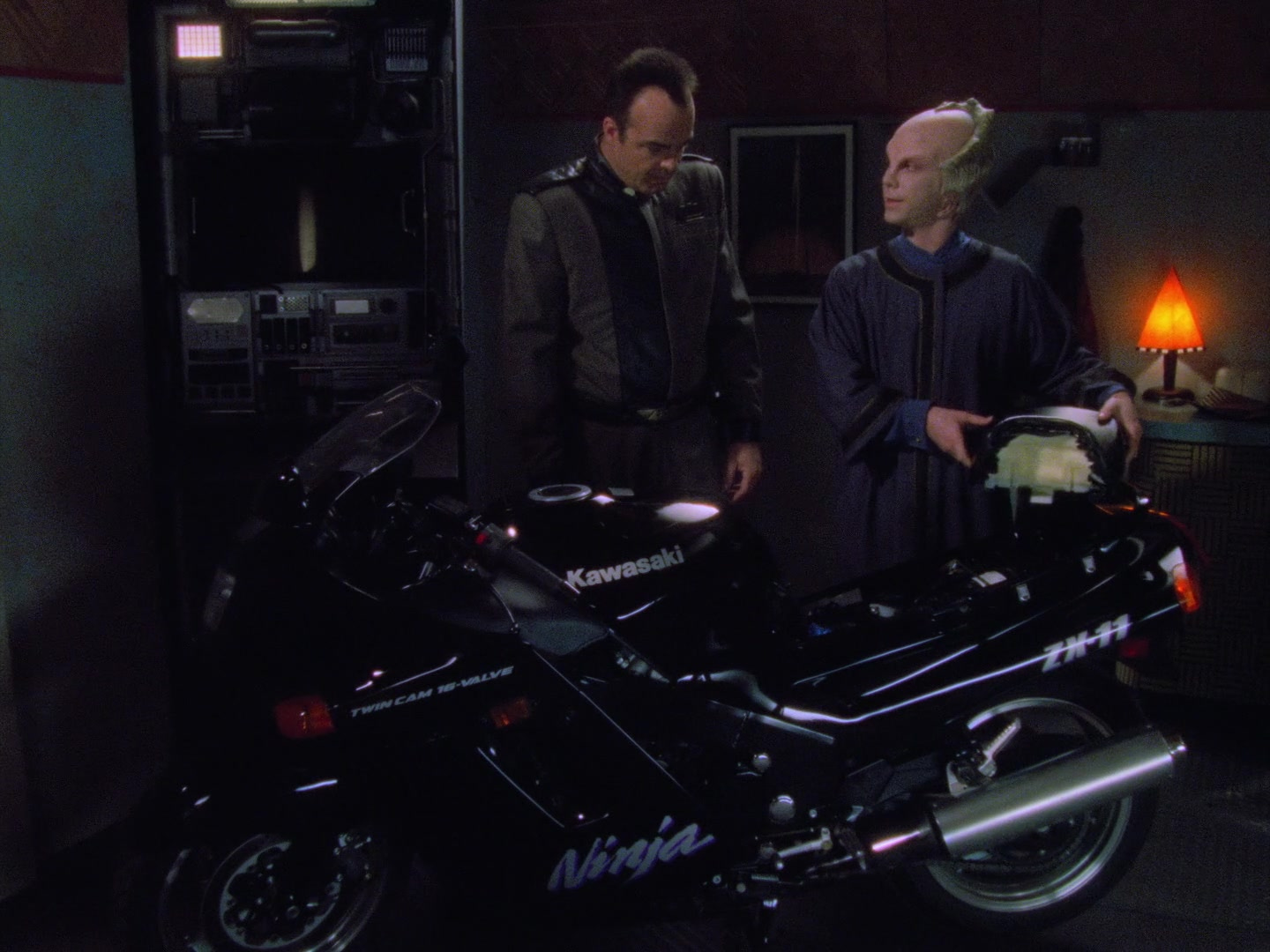
This B-plot was refreshing in that it didn’t try to equal the main plot. It provided the necessary narrative breathing room against the more serious A-plot. As a rule, B-plots have either folded completely into the A-plot, which is fine, or they have been too big. I couldn’t really name this before “TKO,” where the only thing identifying the main storyline was the episode title, but looking back, most of the standalone B-stories were too much. This one was the right size. Lennier studying human rebellion symbolism through motorcycles, then modifying it with Minbari tech, is both funny and thematically on-point.
Technocracy’s Double Edge
We’ve been shown Commander Sinclair’s talent for scouring regulatory fine-print on display in several earlier episodes. Most prominently, in “By Any Means Necessary,” he resolved a dock workers’ strike by interpreting his authority under the Rush Act to respond in the strikers' favor. These earlier incidents now weigh on Sinclair's reputation as he finds himself the subject of an Earthforce internal affairs investigation.
Col. Ari Ben Zayn arrives on B5 along with Psi Corps telepath Harriman Gray to investigate Babylon 5 leadership. He bends rules and pulls rank to subject the crew to telepathic scans, aiming to unseat Sinclair. Sinclair, in turn, cites black-letter regulation at every turn to prevent it. After Zayn relieves Sinclair of his post, Sinclair apprises Gray that as acting commander, he is now subject to a scan. This becomes his undoing, as all along, Gray was a reluctant assistant at best. In fact, Gray has spent the entire episode looking for ways to minimize his role or get out of his task entirely.
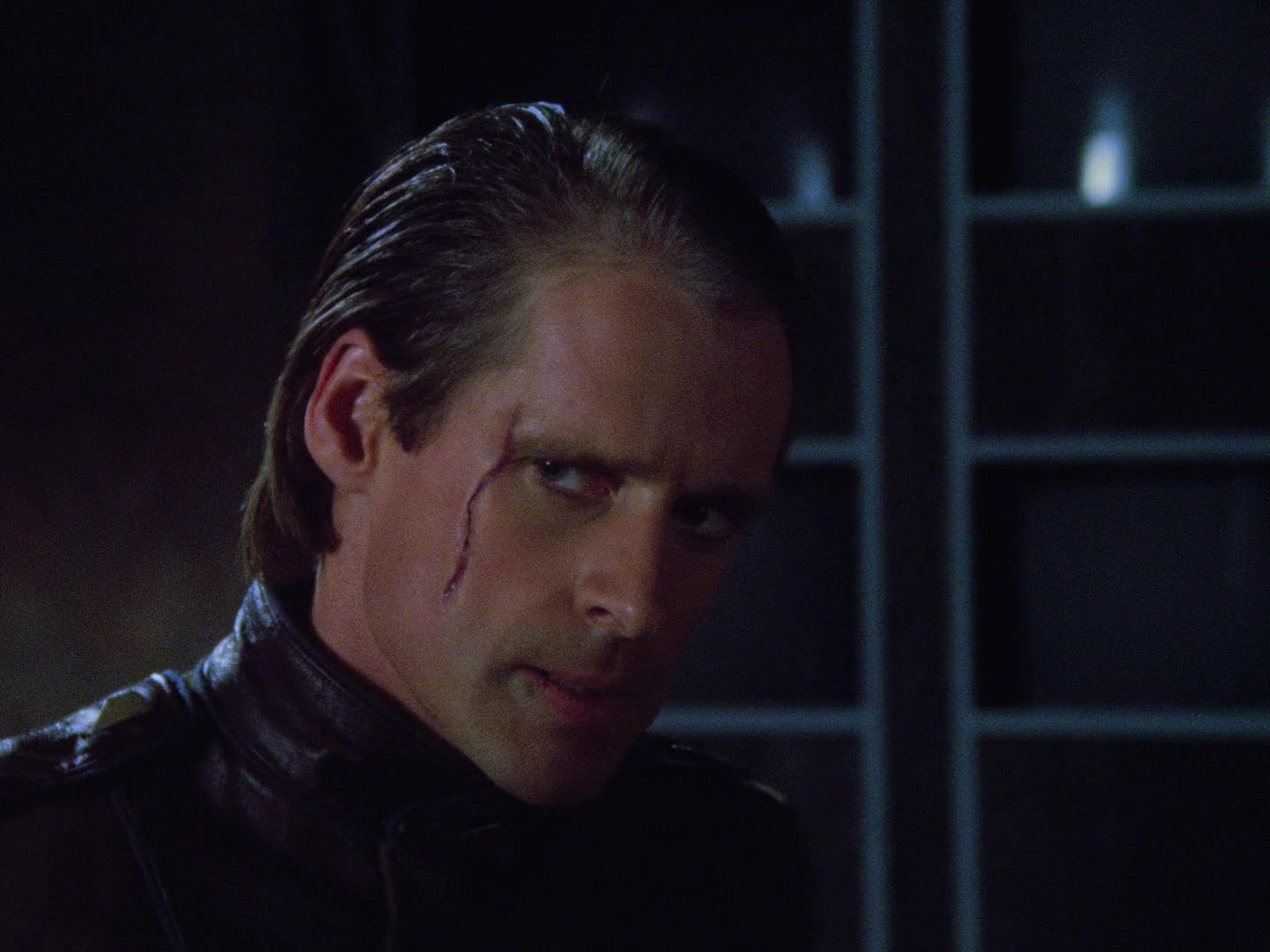
I observed before that Sinclair is a model of the technocratic leader that the ‘90s yearned for. But Zayn reveals that technocratic leadership isn’t leadership at all. It’s actually faith in a set of rules that are so clearly written that they anticipate every eventuality and potential abuse. The leader just becomes the master interpreter. This faith can be easily abused and that risk is clearly illustrated by Zayn. Zayn is brazen about twisting the rules to his own ends.
I don’t know if this was appreciated by the writers or not; there’s not enough here yet to tell. Either way, it is interesting to have a counterpoint showing how the same appeal to rules can go both ways depending on who does it. Sinclair’s superpower may be a mastery of the rule book, but it’s his fidelity to the spirit of the rules that determines how he uses that talent. One may be the galaxy’s best legal analyst but if one does not honor the spirit of the law, it becomes merely a tool for corruption. At the end of the day, Sinclair did not prevail because his rules interpretation was better. He prevailed because he appealed to the same sense of integrity he saw in Grey.
The Loyalty Test
Zayn’s investigation is predicated on his interpretation of a new regulation requiring all staff to submit to telepathic scans as part of an investigation. He’s using it as carte blanche to conduct a fishing expedition that will remove Sinclair from his command position. It turns out, Zayn was a top-10 candidate to run Babylon 5. Angered at being passed over for what he sees as an unqualified “hotshot,” he has correctly deduced that Sinclair was installed by the Minbari. Zayn just needs a way to prove Sinclair is working for them instead of Earthforce.
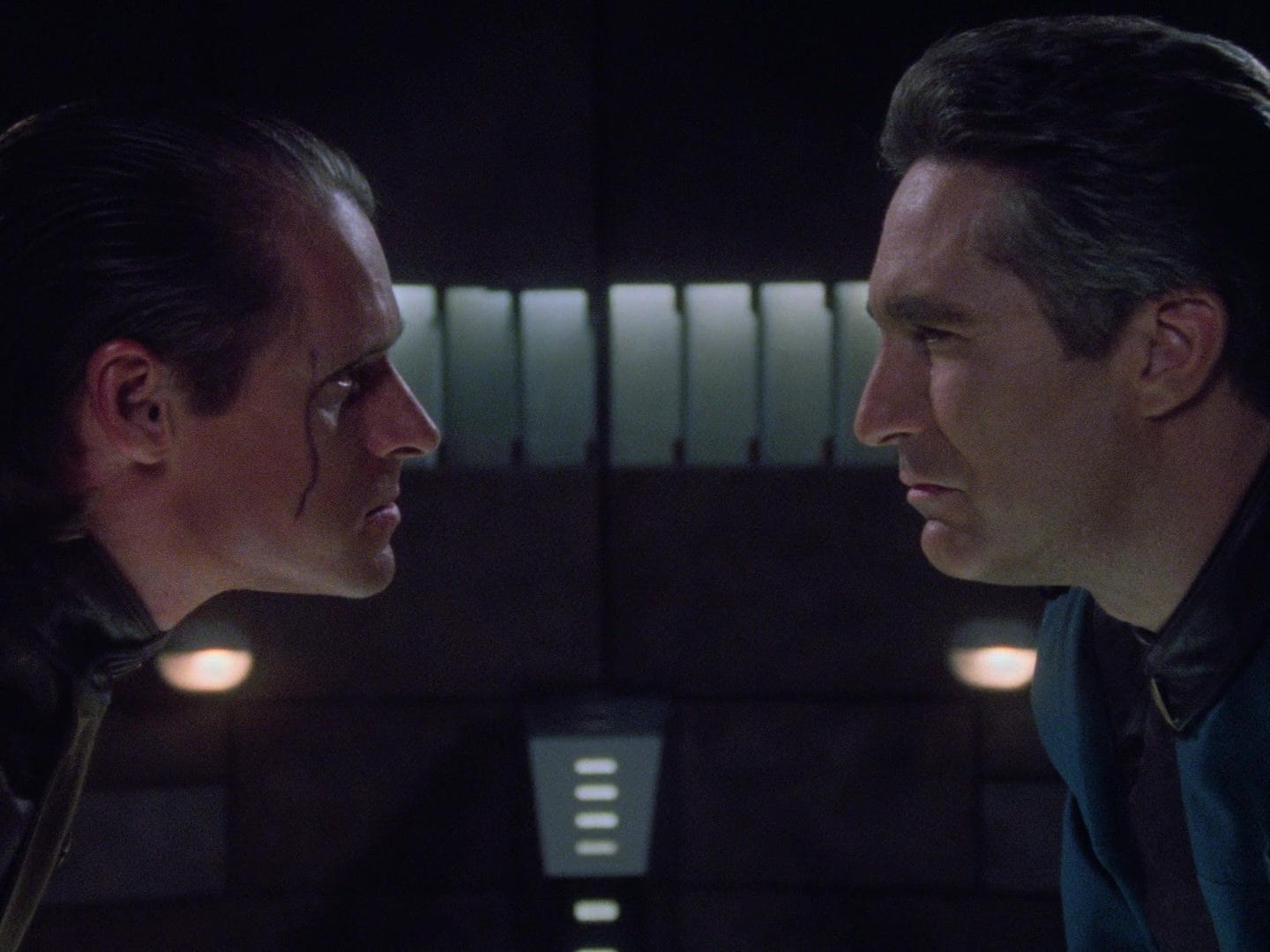
As audience members, we know this is a legitimate vulnerability for Sinclair. It’s true that he’s a Minbari appointment, but he doesn’t fully understand why yet. But, he is abusing his authority. The scanning regs are not intended to conduct loyalty checks. Real-world paranoia about loyalty tests goes back to the Soviet/McCarthy era and lives on today. In the '90s, loyalty tests appeared mainly as shorthand for authoritarian overreach—a relic of Cold War paranoia. In 2026, however, that paranoia has pushed into its unhealthy phase.
Leaders are often criticized for dismissing staff who publicly undermine them. This is often criticized as a loyalty test. However, this is an over application of the warning. The difference really comes down to timing. Zayn was working preemptively to prove disloyalty, inventing excuses to grill people for controversial but above-board action and generally trying to fit the facts to his own preconceived conclusions. Conversely, when leadership responds to active insubordination with dismissal, it is responding to explicit acts of disloyalty. Yes, even in the latter case it touches up against concerns about freedom of conscious, but even that is accounted for in the episode. It’s one thing to have concerns and disagreements. It’s quite another to actively work against your leadership.
Ivanova’s Abstracted Conscience
The conscious consideration is partially accounted for in the episode. Ivanova is prepared to resign her commission rather than submit to a telepathic scan. Her refusal to submit isn’t about political disagreement, it’s about distrust of Psi Corp and protecting her memories of her mother. If you recall, her mother was a telepath who took “sleepers”—drugs to suppress telepathy—to avoid Psi Corps, and it destroyed her. The nightmare sequence—Ivanova running through fog, her mother's face replaced by her own—viscerally conveys that trauma. It's far stronger character work than her sitting shiva in “TKO.”
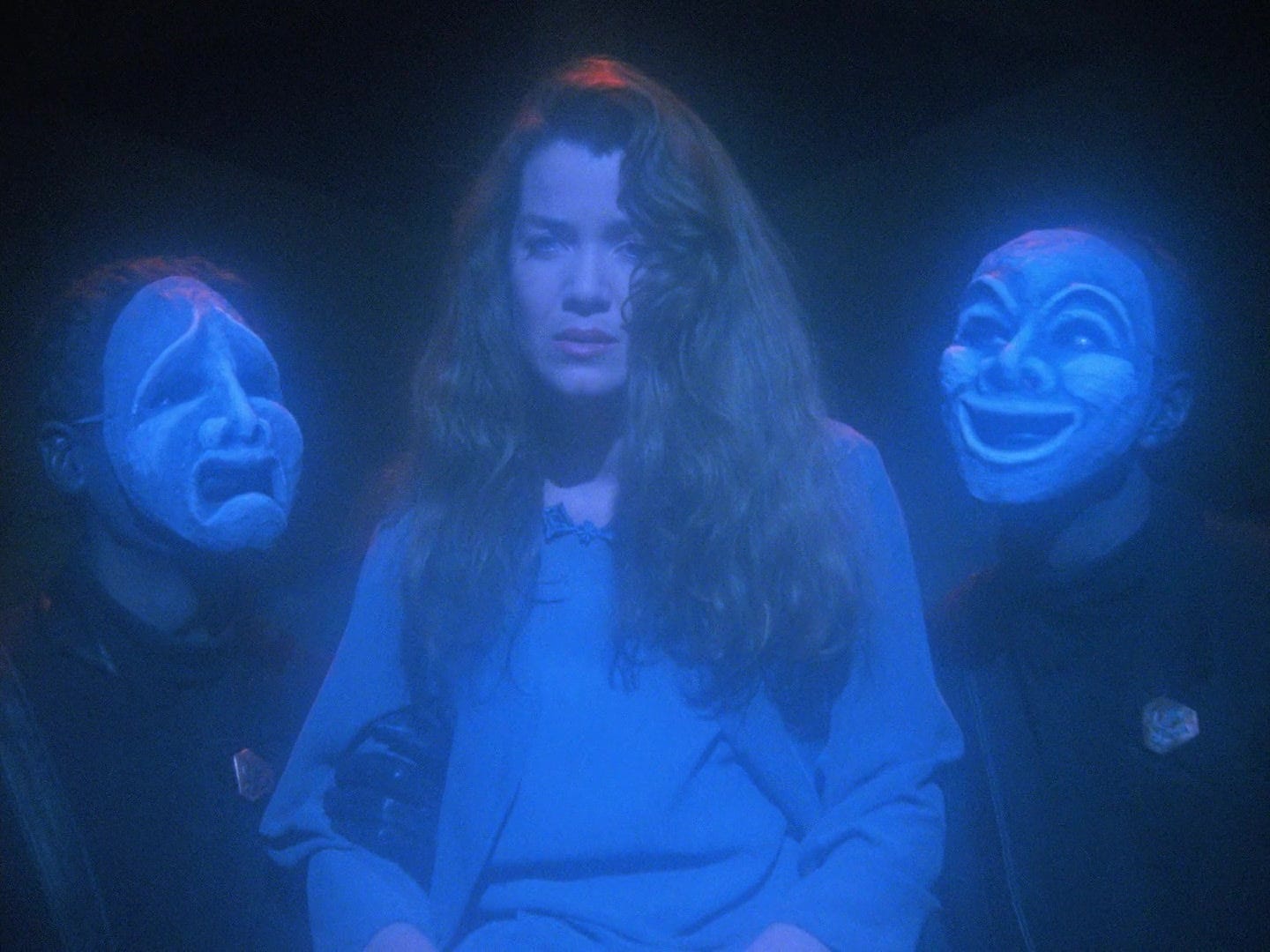
Having her objection be deeply personal and family-related makes it “safe” for the show to explore without getting controversial. Most people agree that people’s personal lives should have no bearing on their profession. But it also sidesteps the harder question: should political dissent be grounds for loyalty testing? That said, the show already struggled to resolve in 40 minutes and it handled the same question in other ways. Making it about Ivanova‘s love for her mother was the way to go for multiple reasons.
Layers of Paranoia
Amid the investigation, Sinclair reaches out to a general for assistance, but the general puts him off with political considerations. Ominously, he promises to help him “when the time is right,” echoing a line spoken quite forebodingly in the introductory scene by Zayn. The repeated line is almost certainly a signal to the audience that he is in alignment with whichever faction Zayn belongs to.
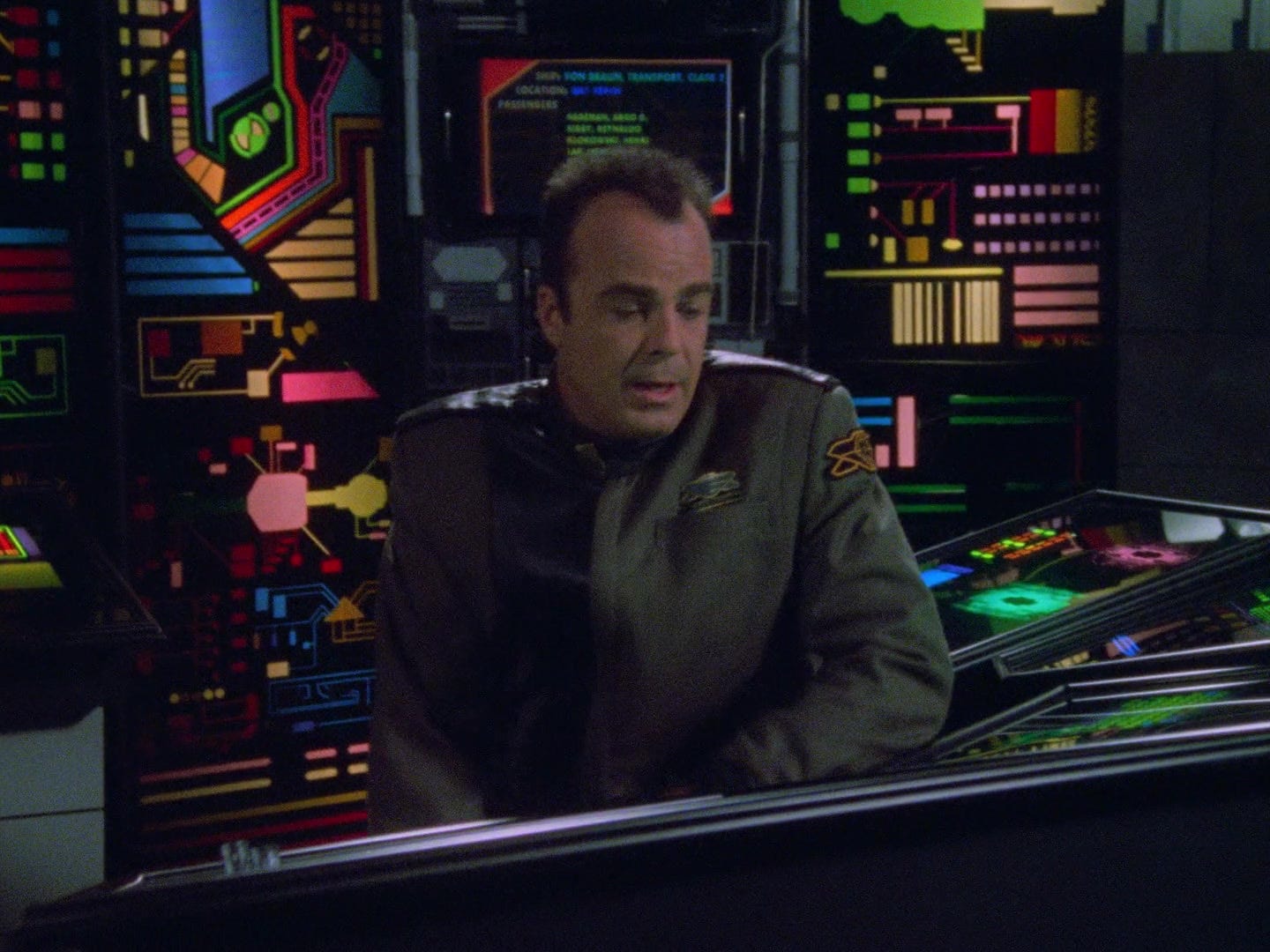
We already know there are factions within factions. Layered intrigue is kind of the baseline promise of Babylon 5. So the question of who anyone can trust lingers. Jason Ironheart warned that Psi Corps has been secretly running things on Earth, a callback that gets overtly linked to Zayn’s actions. Bester is explicitly named as Zayn's co-conspirator. On the bright side, it appears that Babylon 5 has at least one friend inside the Psi Corps in Harriman Gray. But Bester’s name hung over the episode as a threat that the station has yet to fully deal with.
Playing Off, But Not Yet Paying Off
In contrast to “Signs and Portents” which felt more like a pop-quiz than a payoff, this episode rewards viewers for paying attention to earlier threads. It almost overloads on early fanservice, name-dropping, recalling the Deathwalker incident, even mentioning Ragesh 3, but it’s putting them together as a portfolio of ways in which Sinclair has stirred controversy on Earth. Catching every reference isn’t necessary to follow the episode as a standalone, but the attentive viewer can imagine a laundry list of complaints about how Babylon 5 is run circulating through Earth government and media. The episode plays off earlier seeds, but it's not paying them off yet. It's building a case file with Sinclair's name on it.
This is one of the episodes that I consider "skippable" due to it being in many ways a re-hash or summary of the season. Further, Ben Zayn's obsession with ousting Sinclair to take his place seemed a bit too megalomaniacal to me, especially for someone who was supposedly "top 10" and thus one you would think would be more level-headed.
In re: Lennier's chanting over the motorcyle - he took the opportunity to promote his band there. "Lennier's chant, "Za ba ga bee," is the title of an album by Barnes and Barnes, of which Bill Mumy is a member." Fans tend to think it's hilarious, but apparently it's a fairly big breach of some rule or another so JMS said that after he found out that "[W]e discussed it at some length."
JMS's "big quote" about the show --
""Eyes" was a direct consequence of all that preceded it in our first season. It came about because Larry suggested that with all that Sinclair has done, sooner or later somebody's going to take notice back on Earth. There would have to be some kind of investigation. Because we are doing some very specific things with the Psi Corps this year and next, which I wanted to foreshadow, a PC telepath was inserted into the story, to show that they are starting to get a foothold into the military, with new laws concerning scans. We knocked the story back and forth for some time, and it went through many different permutations. We also figured that the episode should be kind of a Cliff's Notes guide to season one, hitting the high points for those who joined the series later than those who were here at the beginning."